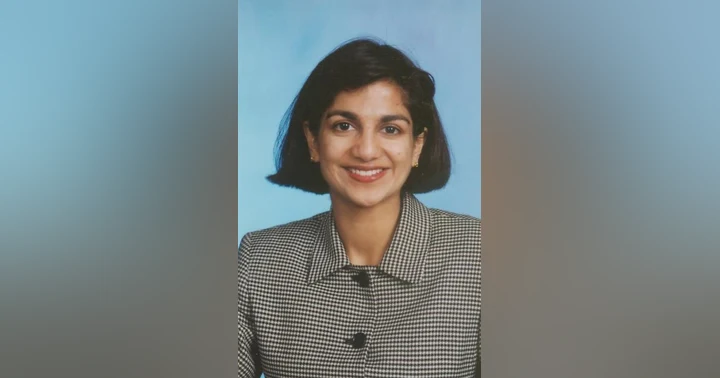
Bonus Episode: Dr. Sneha Anne Philip



This week marks 25 years since the September 11 terrorist attacks struck the United States. Today, we honor the 2,977 people who lost their lives. But among the chaos of September 11, 2001, 31-year-old physician Sneha Anne Philip disappeared from Lower Manhattan. She was eventually officially recognized as one of those victims, but nearly 25 years later, no one knows for certain what actually happened to her.
Today's snack: NY style pizza from Joe's
Support us on Patreon
Sources:
- https://coffeehousewriters.com/getting-away-with-murder/
- https://charleyproject.org/case/sneha-ann-philip
- https://www.nbcnews.com/storyline/9-11-anniversary/still-missing-unidentified-remains-leave-lingering-void-9-11-families-n642076
- https://nymag.com/news/features/17336/
- https://abcnews.com/US/911-victim-identified-kind-genetic-genealogy-technique/story?id=135887895
- https://www.theguardian.com/us-news/2015/sep/21/911-dust-lady-marcy-borders-depression-rehab-back-from-the-brink-then-a-final-bombshell
0:00 This week marks 25 years since the September 11th terrorist attacks struck the United States. Today, we honor the 2,977 people who lost their lives. But among the chaos of September 11th, 2001, 31-year-old physician Sneha Ann Phillip disappeared from Lower Manhattan. She was eventually officially recognized as one of those victims, but nearly 25 years later, no one knows for certain. What actually happened to her? I'm Rich. And I'm Tina. Welcome to a bonus episode of Love, Marry, Kill.
0:40 Hey, Rich. Hey, Tina. How are you? I am doing well. How are you? Good. How do I sound? You sound amazing. I was just doing some vocal exercises. We've been doing this podcast for almost four years, and I don't think I've ever once thought of doing vocal exercises. Being the professionals that we are, we've never thought of actually warming up our vocal cords. Can you repeat after me? Okay. This is harder than you think. Mi, me, ma, mo, mu. Mi, me, ma, mo, mu. Bi, be, ba, bo, bu. Bi, be, ba, bo, bu.
1:20 Di, de, da, do, do. Dee-day-da-do-do. Gee-gay-ga-go-go. Gee-gay-ga-go-go. All right. Do you feel warmed up? Oh, I feel, yeah. I think it's going to be great. As usual, you are the MVP of the podcast. No. When I said I was going to do this episode, I am writing two episodes this week, which is. A lot for me. And I asked you if you could take care of the snack and you, where did you go? I went to Joe's Pizza and got New York style pizza, which we've never been to Joe. Joe, Ann Arbor has two New York style pizza places that are pretty authentic. Joe's actually originated from New York and they've opened a few stores here and there and one is in Ann Arbor.
2:04 So yeah, I went and it looks pretty amazing. It's huge. The slice is bigger than my head, and I have an enormous head. You also got breadsticks, and you picked up a Diet Pepsi on ice. You can't have. Pizza without having a fountain drink. You went above and beyond. The breadsticks, I would give a 10 out of 10, and I think we're going to try the pizza. I'm sure I've had New York-style pizza, but we're going to start a big war here between New York-style pizza and Detroit-style pizza. I love Detroit-style pizza. But then there's Chicago-style pizza, which I also like. It's very confusing. So Detroit and Chicago are pretty similar. I don't think anyone would fight me on that. But New York is like a whole different ballgame. Detroit and Chicago are both a very thick crust, and I like the thick crust.
2:56 And they're very like a deep dish kind of thing. The longer I talk, I know the less warm and gooey this. Pizza is going to be. Should we take a break and. Give it a try? Yeah, let's take a bite. I wouldn't say I'm a convert, but that was actually really good. I'm surprised how much I liked it. Yeah, it was really good. I'm definitely not going to replace Detroit-style pizza in my heart, but it was good. Yeah, I like the cheese. I like the crust. I wasn't sure if I was supposed to fold it over or not, so I did take a few bites before I folded it over. You kind of need to. And then I folded it. I know it's pretty big, but it was really good, so good job, Joe's. One thing I'm a little disappointed about is I'm a plebeian, so I kind of wanted some ranch dressing to come with it. And when I ordered it, it said it came with Zingerman's, which if you're from the Ann Arbor area, you know that Zingerman's is an institution here.
3:50 And it was supposed to come. With Zingerman's Ranch, which I was excited to try. But it was still really good. I would give it, I'd probably give it a 9 out of 10. With the caveat that I haven't eaten yet today, so I think I'm just kind of hungry. But that was really good. I'm going to give it an 8 out of 10. And I would give Detroit-style a 10 out of 10. But if you have had both New York and Detroit-style pizza, we're curious what you guys prefer, so let us know. Sneha Ann Phillip was born on October 7, 1969, on the Malabar Coast in Kerala, India. She was the second of three children born to Ansu and Dr. Kochi Phillip.
4:31 She grew up with an older brother Ashwin and a younger brother John. When the children were young, the family emigrated from India to the United States. After completing his training in radiology in Albany in 1985, Dr. Philip accepted a position in Poughkeepsie, and the family settled nearby in Hopewell Junction, a small but growing community in New York's Hudson Valley. Once a largely rural farming area, by the 1980s it was growing into a suburban community fueled in part by IBM's large facility in nearby East Fishkill. Sneha was exceptionally bright and curious, but medicine wasn't her only interest.
5:11 She loved music and writing, and especially painting. She also loved to travel. After graduating from Johns Hopkins University in Baltimore in 1991, she enrolled at the Chicago Medical School. While studying in Chicago, Sneha met Ron Lieberman, a Jewish Los Angeles native with shoulder-length hair and a goatee. He was a fellow medical student who was a year behind her. Like Sneha, Ron had interests outside of medicine. He loved music and played guitar. Together, they enjoyed eating sushi and going to jazz clubs. The two fell in love, and Sneha eventually took a year off of medical school, spending part of that time traveling through Italy, enjoying the culture.
5:53 food, and painting. The break allowed Ron to catch up with Sneha academically so they could graduate together and begin the next stage. Of their lives. Sneha and Ron graduated in 1999 and married in May 2000, surrounded by 250 loved ones. Their wedding ceremony incorporated elements from both of their cultures. Ron was Jewish while Sneha had been raised in the St. Thomas Syrian Christian tradition of Kerala. Ron placed a minu around Sneha's neck purchased by her parents. A minu is a traditional Malu Yali Christian wedding pendant that she continued to wear after their marriage. It would later become one of the identifying details her family included while searching for her.
6:37 After marrying, Sneha and. Ron moved to New York City and settled into an apartment at 225 Rector Place in Battery Park City. That location would become extraordinarily important to Sneha's story. Battery Park City sits along the Hudson River at the southern end of Manhattan, next to the Financial District. Despite being surrounded by one of the busiest parts of New York City, it's largely a residential neighborhood, surrounded by high-rise apartment buildings, parks, and paths along the waterfront. Sneha and Ron lived only a few blocks from the World Trade Center, which dominated the neighborhood skyline. Century 21, one of Sneha's favorite places to shop, to directly across from the World Trade Center.
7:20 It was a popular New York discount department store known for selling designer clothing, shoes, and. Housewares at bargain prices. In late summer 2001, both Sneha and Ron were young doctors building their careers. Ron was an intern in emergency medicine at Jacoby Medical Center in the Bronx, while Sneha was completing her residency in internal medicine at St. Vincent Medical Center on Staten Island. But over the last year, Sneha had experienced some serious setbacks. She had previously been a resident at Cabrini Medical Center in Manhattan, but in May 2001, the director of residence informed Sneha that her contract would not be renewed, citing tardiness and alcohol-related issues.
8:05 Cabrini's decision effectively ended Sneha's residency there, a potentially devastating professional setback after years of medical training. She was essentially fired from the program, but Sneha agreed to complete her contract at Cabrini, which ended in late June. Just days before she was set to start a new position on June 21st, she went out with a group of co-workers and later accused a male colleague of groping her. Authorities investigated her allegation, but prosecutors ultimately dropped the case, concluding there wasn't enough evidence to pursue charges. Instead, Sneha herself was charged with falsely reporting an incident. She was arrested and spent a night in jail. Prosecutors offered to drop the charge if she withdrew her accusation, but Sneha refused, maintaining that she had been assaulted and pleaded not guilty.
8:59 That's really interesting that they accused her of falsely reporting something. I mean, in those situations, I can always see how it's really hard when one person accuses another. And it's just, you know, he said, she said type of thing. But it seems like it would be the same thing with the false accusation allegation as well. Like, how did they what evidence did they have that? I mean, they were surrounded by co-workers. I don't really have any more information. Yeah. But I think we have to remember that it was 25 years ago before the Me Too movement. And, you know, things really have changed since then. Yeah. After Sneha disappeared, investigators began digging into her life and the problems she had experienced during the previous year became part of. A much darker portrait.
9:40 Former co-workers and others who knew her described her heavy drinking and alleged drug use along with nights when Sneha would stay out late and sometimes not come home at all. Sneha's family strongly disputed many of those claims. They believed that she had been the victim of racial and sexual discrimination at Cabrini and felt that some of the allegations made after her disappearance unfairly portrayed her as troubled and unstable. Years later, an appellate court would also question the reliability of some of the more sensational claims made about her. Ron acknowledged that Sneha enjoyed nightlife. She frequently went to gay and lesbian bars, particularly to listen to live music, and after the groping incident, he said that she felt more comfortable in places where she could enjoy herself without unwanted attention from men. Ron dismissed speculation that this meant Sneha was bisexual, saying, quote, Because we don't live a conservative lifestyle doesn't mean that anything abnormal is going on.
10:40 Ron disputed the assumption that Sneha spending the night with women she met while she was out meant that she was having sexual relationships with them. He recalled one occasion when Sneha went home with a female artist and returned the next morning covered in paint. To Ron, it was an example of Sneha's artistic, spontaneous nature, not evidence that she was being unfaithful. It sounds like the reality is we don't really know for sure whether Sneha was having intimate relationships with the women that she met at these bars or not. We don't know for sure, but the signs are pointing to, yes, she had romantic relationships with women. Again, this was 25 years ago and attitudes have changed. Right. But remember, she comes from, you know, an Indian family and.
11:23 Very traditional family. Yeah. On the morning of Monday, September 10th, 2001, Sneha appeared in court in connection with the groping case. Ron was there supporting her, but after hearing more of the evidence presented against her, the two got into a heated argument about Sneha's drinking, possible drug use, and relationships with women. Sneha angrily walked away without Ron. Court records revealed that Sneha sometimes stayed out all night with people Ron didn't know and frequented gay and lesbian bars in Manhattan, including Julie's, Henrietta Hudson, and Meow Mix. A police report also contained the explosive allegation that Sneha's brother John had told the detective he once walked in on Sneha having sex with his girlfriend. John later denied that it happened. Ron and the rest of Sneha's family also strongly disputed the broader portrayal of Sneha as struggling with drugs, alcohol, or serious problems in her marriage. After storming off from Ron, Sneha returned to their apartment while he went to work She didn't have work that day. She was in the midst of a suspension. After she was let go from Cabrini, she was offered a position at St. Vincent's. Her acceptance of the job included a clause that required her to have meetings with a substance abuse counselor. She had blown off a meeting, which resulted in her current suspension. Sneha's cousin, Anu, was coming for dinner on September 12th. The apartment was
12:53 a mess, so Sneha planned to spend the day cleaning, running errands, and doing some shopping. At 2 o'clock that afternoon, Sneha talked to her mother online. They were very close. Later, Ansu said her daughter told her everything. They chatted for nearly two hours. During their conversation, Sneha mentioned she wanted to visit Windows on the World, the famous restaurant located at the top of the North Tower of the World Trade Center. A friend was considering hosting their wedding reception there. Sneha may have gone there, but there's no evidence that she did. At about 5.15pm, surveillance cameras in Sneha's apartment building captured her leaving. First, she dropped off clothes at a nearby dry cleaner, and then walked to the Century 21 store. Ron was working late. Surveillance cameras inside the department store captured Sneha browsing through the racks of clothing.
13:47 She wore a brown, short-sleeved dress and sandals, with her dark, shiny hair pulled back into a ponytail. Using Ron's American Express card, she spent approximately $ 550 on clothing, lingerie, bed linens, and three pairs of shoes. At 7.18pm, Sneha completed her final purchase. This is the last time we can pinpoint her location with certainty. A Century 21 employee later remembered Sneha being there because she was a regular customer. The employee believed Sneha had been shopping that evening with another woman she described as small, in her 30s, and possibly of Indian descent. They were seen together in the shoe department, where there were no cameras. Later, Ram spent three weeks scrolling through the store's surveillance recordings. He eventually found images of Sneha shopping, but there was no one accompanying her.
14:41 If someone had been with Sneha that evening, she has never been identified and no one has come forward. Sneha left Century 21 carrying several shopping bags. Neither Sneha nor the shopping bags have ever been found. So it seems, I don't know how many cameras there are in this Century 21 store, but it seems really unlikely that she was there with someone else if every time she was caught on camera, she was just by herself. Okay, so picture Ron in this little room, searching through all the surveillance footage. And again, 25 years ago, there probably weren't an abundance of cameras. I think he only found a handful of images of her. I don't know if there were any images of her leaving the store.
15:23 So it's possible that there was someone else there. Yeah. When Ron returned to their apartment late, just before midnight, he discovered that Sneha wasn't home. He wasn't really worried. Sneha occasionally stayed overnight with friends or relatives without coming home, but Ron was annoyed because they had an agreement that she would let him know when she was spending the night somewhere else. So I should mention here, Sneha wasn't always spending the night with, you know, random women that he didn't know. Sometimes it was a cousin or a friend that he did know. Gotcha. Or her brother. Ron had to be at work early the following morning. Rather than trying to track Sneha down, he headed to bed. Later, the investigation revealed that at 4 a.m., a call was placed from the landline inside the apartment to Ron's cell phone.
16:11 Ron didn't remember making the call, although he wondered if he might have been awakened briefly and called his own phone while checking his voicemail, something that doctors frequently do to check on patients. But could Sneha have returned to the apartment sometime during the night? Had she placed the call? If so, why? Was she in trouble? The building had surveillance cameras in its lobby, but there's no known footage of Sneha entering the building at any time during the night. Whoever placed the call remains a mystery, but it's also likely a red herring. So just so I'm clear, this call was from Sneha and Ron's apartment landline to Ron's cell phone. Ron was home at the time, right? Gotcha.
16:51 Gotcha. In 2001, our cell phones weren't an appendage like they are today. True. Right? Yeah. So it probably wasn't sitting next to him charging. It might have been in his briefcase or in a coat pocket. Right? Isn't that how we treated our cell phones back then? Yeah, definitely. So he would have used the phone maybe that was on his nightstand to call and get his voicemail. Right. That makes sense. But I can't imagine Sneha would call his cell phone from the apartment. Yeah, that doesn't really make sense. Right. Ron woke early the next morning to find that Sneha still hadn't come home. At 6.30 a.m., he left the apartment and headed to work for an early meeting. When Sneha spent the night away from home, she typically returned between 7 and 9 the following morning, according to Ron.
17:38 At 8.43 a.m., a surveillance camera in the lobby of Sneha's apartment building recorded a woman entering the building. She closely resembled Sneha. Morning sunlight washed out much of the image, leaving the woman mostly in silhouette, but her height, build, hair, and clothing appeared consistent with Sneha. The woman walked toward the elevators and waited for several minutes before suddenly turning around and walking back outside. The timestamp on the surveillance footage read 8.43 a.m., but there's no indication that investigators ever confirmed the building's clock was accurate to the minute. At 8.46 a.m., American Airlines Flight 11 slammed into the North Tower of the World Trade Center, only a few blocks away. If the woman was Sneha, was she still standing in that lobby when the plane struck? Did she hear the crash and rush outside to see what had happened?
18:32 It's frustrating, but we'll never know. But I assume that's why she must have left the building. Yeah, have you seen the footage? Because I would be curious how this person left. Was she... startled suddenly. No, I have not seen the footage. I don't believe a picture exists. That the public can see. Yeah, that does make sense, though. I could totally imagine you're standing there and you hear a crash outside. You're going to turn around and go outside to see what's going on. Yeah. Later, Ron poured over the oversaturated images, but couldn't say with certainty that the woman was his wife. An NYPD detective who investigated Sneha's disappearance believes that it could have been her. Her family agrees that the silhouette matches Sneha, as does the hairstyle, clothing, and mannerisms. But if the woman was Sneha, where were the shopping bags from century 21?
19:25 Possible that she just forgot them at her friend's house wherever she stayed. That's $ 550 worth of clothing. It seems like that's something you would most likely remember. Or maybe she was just like, I'll come and get it later. That could be. We'll be back after a break. Initially, after the first plane struck, people on the streets below had no idea what had happened. There was an enormous boom, loud enough to reverberate through the surrounding streets, followed almost immediately by the sounds of shattering glass and debris raining down from above. People stopped in their tracks and looked toward the sky, trying to understand what they had just heard. Some thought there had been an explosion, others believed a small plane had accidentally struck the building.
20:15 No one was aware of the horror yet to come. Burning debris fell into the surrounding streets as people began evacuating the tower. 17 minutes after the first tower was struck, at 9.03 a.m., United Airlines Flight 175 struck the South Tower. There was no longer any question that the United States was under attack. Ron was in the Bronx working at the Jacoby Medical Center. When his meeting ended, he found his co-workers gathered around a television in the hospital waiting area, staring at the screen in horror as the attacks unfolded. As the scale and terror of the catastrophe became apparent, Ron began desperately trying to reach Sneha, but she didn't have a cell phone. He called their apartment repeatedly and left messages, but there was no answer. He called Sneha's family to see if they knew where she was.
21:07 No one did. At 9.37 a.m., American Airlines Flight 77 crashed into the Pentagon in Arlington, Virginia. At 9.59, after burning for 56 minutes, the South Tower collapsed. At 10.03, United Airlines Flight 93 crashed into a field near Shanksville, Pennsylvania after passengers and crew members fought back against the hijackers. At 1028, the North Tower collapsed. In less than two hours, the New York City skyline was transformed forever, along with the lives of millions of New Yorkers and Americans who watched the unimaginable unfold. Ron desperately wanted to return to lower Manhattan to find Sneha, but the city had become nearly impossible to navigate. It was like swimming upstream. Streets were closed, public transportation was at a standstill as emergency vehicles streamed toward the disaster. Frantic, Ron hitched a ride with an ambulance leaving the hospital. The ambulance could only take him so far. He was forced to fight his way through crowds, closed streets, and rubble, explaining to the police officers blocking his path towards his apartment that he lived there. It was dark when he reached home, six hours later. When he finally arrived at his 23-story apartment complex, the power was out, which meant the building's electronic locks weren't working.
22:29 Unable to gain entry, he spent the night with a friend. The following day, Ron was able to enter the apartment. Though he hadn't heard from Sneha, he was hopeful that she would be there waiting for him. The sight of his home was haunting. Thick, gray dust from the collapsed World Trade Center had blown into the apartment through an open window, settling throughout the rooms, coating every surface. Ron feverishly looked for signs that Sneha had returned home, but the dust covering the floors was undisturbed, except for the tiny footprints that belonged to their two kittens. Figa, and Kali. There were no human footprints, no sign that Sneha had been there. The realization hit Ron like a slap in the face, a terrifying possibility that his wife was among the thousands of people who had lost their lives in the terrorist attacks.
23:18 I can't even imagine that experience that so many people went through that day of not knowing where their loved one was, not being able to make a phone call because all the cell towers were blocked and a lot of people didn't even have cell phones. not being able to get from one place to another. It's just, it's so chilling to even think about. Utter chaos. In the aftermath of September 11th, New York City was dealing with a catastrophe on a scale that was incomprehensible. Thousands of people were missing. Families walked the streets carrying photographs of their loved ones, pleading with strangers to ask them if they'd seen them. Every flat surface across the city, walls, fences, telephone poles, and lampposts, were plastered with missing persons flyers.
24:03 Ron reported Sneha missing to the NYPD and began posting flyers of his own. Soon, her face joined the thousands of others staring out from missing persons posters papered across the city. But Sneha's disappearance presented an unusual problem. No one knew for sure if she'd been at the World Trade Center when the attacks occurred. Her last confirmed sighting had been the previous evening while shopping at Century 21. With more than 9,000 people reported missing, the NYPD was overwhelmed. It took nearly three years for authorities to determine the final number of people who were killed in New York City. In January 2004, that number was set at 2,749, and Sneha Ann Phillip was among them. In the meantime, Ron began conducting his own investigation. He contacted American Express to trace Sneha's last known purchases, which led him to the surveillance footage from Century 21. When that didn't turn up any leads, he hired a private investigator. Ken Gallant, a former FBI agent, helped Ron reconstruct Sneha's movements. Gallant's investigation uncovered the mysterious 4 a.m. telephone call. and the 8.43 a.m.
25:17 surveillance footage from 9-11. Ron carried Sneha's picture with him and showed it to people all over the city. No one had seen her. When all leads dried up, the PI even brought in a psychic. Grasping at straws, Gallant proposed that maybe Sneha hadn't. Died on September 11th. Could she have used the opportunity to start over somewhere new? By the summer of 2001, Sneha's life had become complicated. Her medical career was in jeopardy. She was facing a criminal charge. There were problems in her marriage, although Ron disputed portrayals of their relationship is deeply unhappy. And then there were the stories about Sneha's partying. She was drinking heavily, frequently gay and lesbian bars, spending nights away from home, and allegedly having relationships with women. There were even rumors that she was having an intimate relationship with her sister-in-law, which again, her husband and brother deny vociferously. These accounts portrayed Sneha as living a secret or double life that her family didn't approve of fueling the theory that she may have wanted to disappear or start over. Those allegations have followed Sneha's case ever since but there is no evidence to establish any of it was actually true. While Sneha's life had become messy if she was going to start over surely she'd take something with her. The PI examined Sneha's computer and found nothing indicating that she had been preparing to leave New York City or establish a new identity. Sneha had left behind her passport, driver's license,
26:50 most of her credit cards, and even her glasses. There was no indication that she had secret savings and no subsequent financial trail or credit alerts. In 25 years, there's been no sighting of Sneha and no communication with her family. She loved her family. And it's an absurd theory that she'd make a spur-of-the-moment decision to take advantage of the chaos following 9-11 to leave her life behind. It would have been. Very difficult for her to leave the city that day, and there were no flights for days afterward. Eventually, both private investigator Gallant and the New York Police Department detective who investigated the case came to believe that the most likely explanation was the simplest one. Sneha had likely perished on September 11th near the World Trade Center. but exactly how will haunt her family forever. They believe Sneha may have returned to Lower Manhattan that morning and after seeing what was happening at the World Trade Center, had gone toward the disaster rather than away from it. As a physician, she could have tried to help injured people in the streets or around the complex. There were calls that morning for medical professionals to assist the injured, but there is no evidence that Sneha entered either tower and no witnesses that have ever been found who remembered seeing Sneha. for treating patients there.
28:09 Sneha's younger brother John made things more complicated. Although he and Sneha had been in a fight and hadn't talked in weeks, possibly because of the alleged affair between Sneha and his girlfriend, he was desperate to generate media attention for his missing sister at a time when thousands of families were competing for the same attention. He told reporters a dramatic story. Quote, I was on the phone with her and she told me she couldn't leave because people were hurt. She said, I have to help this person, and that's the last thing I heard from her. While it is plausible that Sneha could have done that, she was a kind, generous person and a doctor who liked to help people. He later admitted that he had made the story up to get the media's attention. John's story did get a lot of attention. He was featured by several television networks. Sneha was transformed in the media from a missing woman into a heroic doctor who had died helping victims of September 11th. But once the fabrication was exposed, it also damaged the credibility of the family's belief that she really had died at ground zero. I can understand why John did that, but that really bothers me that he did that. It's just kind of icky to basically make your sister out to be a hero and go on news outlets and talk about that.
29:26 That said, though, I think it's very possible that's what happened. It is possible, yeah, but it bothers me making up a story like that and taking it to the media. Well, and taking attention away from all the other heroes from that day because there were so many people that were heroes that day. In the year after the attacks, Sneha's family became part of the 9-11 community, finding comfort and connection among other families who were grieving lost loved ones that day. Sneha's name was read along with the names of the victims in various ceremonies. The family held a private memorial for Sneha at their church. They buried an urn filled with ashes from Ground Zero. A memorial plaque bearing Sneha's name and September 11, 2001 as the date of her death was later placed at Dutchess Community College, where her mother worked in the IT department. And this is where the story turns a little dark and murky. Years later, when the evidence surrounding Sneha's disappearance was examined in court, An appellate judge noted that some of the most damaging claims about Sneha were based on multiple layers of hearsay. The NYPD detective who investigated her disappearance also admitted under oath that he had not established with certainty that Sneha actually had a drug problem. As the years passed, the question became a legal one as well as a personal one.
30:50 In October 2002, Ron filed a claim with the Federal Victim Compensation Fund saying he hoped to use the money to establish a memorial fund in Sneha's name, although others accused him of greed. In court, he sought to have Sneha legally declared dead with September 11, 2001, established as the date of her death. But in January 2004, unable to find evidence proving that Sneha had been killed on September 11, the medical examiner removed her from the official list of 9-11 victims. Ron's claim with the victim compensation fund was denied because he couldn't produce a death certificate establishing that Sneha had died in the attacks. Based on her age and potential earnings as a physician, an attorney familiar with the fund estimated the claim could have been worth between $ 3 and $ 4 million. In the weeks after September 11th, Congress created a federal victim compensation fund for those injured in the attacks and the families of those who were killed. The fund ultimately awarded more than $ 7 billion.
31:56 Ron filed a claim on Sneha's behalf, but without a death certificate establishing that she had died in the attacks, his claim couldn't be approved. In November 2005, Ron suffered another setback when a Manhattan surrogate's court judge refused his request to declare September 11, 2001 as Sneha's date of death. The judge was not convinced there was enough evidence to establish that Sneha had been at the World Trade Center that morning. Instead, under New York law, Sneha was declared legally dead as of September 10, 2004, three years after she was last known to be alive. Ron refused to accept the decision and appealed. Finally, on January 31, 2008, the appellate division of the New York Supreme Court reversed the decision. The court's majority concluded that the circumstantial evidence was sufficient to establish that Sneha had been present at and killed in the World Trade Center attack. Her legal date of death became September 11, 2001. The deadline for claims to the Victim Compensation Fund passed in December 2003, and by the time Sneha was officially declared a 9-11 victim in 2008, the original fund had long since closed.
33:16 Ron received no compensation. Today, Sneha Ann Phillip is officially recognized as one of the 2,977 victims killed in the terrorist attacks of September 11, 2001. But we still can't answer the question her family has been asking since the morning the towers fell. What actually happened to Sneha? Her last confirmed sighting remains the surveillance footage from Century 21 on the evening of September 10. We still don't know where she went afterward, where she spent the night, or whether the woman seen at her apartment building the following morning was her. Her shopping bags have never been recovered, the woman who may have accompanied her at Century 21 has never come forward, and Sneha's remains have never been identified.
34:06 There are still other possibilities. Something unrelated to September 11th could have happened to Sneha the night of September 10th. or she could have deliberately disappeared, although investigators found no evidence of that and think it's unlikely. The allegations of drug and alcohol abuse plagued Sneha's family. Sneha's mother, Anzu, said, they're trying to fabricate a picture, making Sneha look so bad. It looks like she's some kind of confused, mixed-up, horrible person. She's far from it. So kind, compassionate, beautiful inside, beautiful outside. I don't have a grain of hope that she's alive or that anything else happened to her. It's more peaceful for me to think she died in the World Trade Center than I cannot bear to think that somebody killed her. Sneha's family hopes that perhaps someday at least her jewelry will be found.
34:59 Her engagement ring or wedding band, the diamond stud she wore in her ears, or the minu that her parents gave her on her wedding day. Most of all, Sneha's family wanted her name included on the memorial. Today, if you visit the 9-11 memorial and look at panel S-66 surrounding the South Pole, you'll see Sneha Ann Phillips' name inscribed in bronze among the victims of the attack. Rest in peace, Sneha. Rest in peace to all of the victims. Our thoughts and best wishes are with the survivors and the families of the fallen. On September 11, 2001, 2,977 people were killed in the terrorist attacks. Of those, 2,753 died at or near the World Trade Center. 184 were killed at the Pentagon, and 40 passengers and crew members died aboard United Airlines Flight 93. The victims hailed from more than 90 countries. For the families, the unimaginable grief of that day was compounded by the fact that they never received remains of their loved ones. 25 years later, remains have never been identified for 1,099 of the people killed at the World Trade Center, almost 40% of the victims.
36:09 The unidentified and unclaimed remains recovered from the World Trade Center are kept in a secure repository underground at bedrock level beneath the site between the footprints of the Twin Towers. The repository is not open to the public, but beside it is a private reflection room where family members can visit and feel close to the people they lost. For some families, knowing the remains are there provides a measure of comfort. Monica Eichen Murphy, whose husband, Michael Patrick Eichen, died in the South Tower, has said that the World Trade Center is the place where she feels most connected to him. Other families feel differently. Sally Regenhardt, whose son Christian was a firefighter killed responding to the attacks, has said that keeping the unidentified remains in the repository is painful and that she wishes the space offered families greater sanctity and reverence. But remarkably, victims are still being identified.
37:02 In August 2026, New York City announced that the remains of another woman killed at the World Trade Center had been identified, making her the 1,654th victim to be identified. Her family has chosen not to identify her publicly. It was the first identification made with the help of forensic investigative genetic genealogy, the same type of technology that has helped solve decades-old criminal cases. And that technology did not exist 25 years ago. Dr. Jennifer Odean, a forensic anthropologist in the New York Medical Examiner's Office, told ABC News, quote, We already can see that it's promising. Not every case is going to be able to go through genetic genealogy, but we do have DNA profiles that are not matching to our reference samples. So that's the group right now that we're focusing on and that hopefully is going to yield more positive results. Bodian has 47 DNA profiles she hopes to identify with this new technology. The office of the chief medical examiner vows to never stop trying to identify the victims. The medical examiner continues to retest remains as DNA technology improves. If Sneha died at the World Trade Center, perhaps one day those advances will finally provide the evidence that she was there. Because of the length and the heat of the fire from the towers, some remains were entirely burned, and that's why the jewelry became important, that someone could be identified by the jewelry if there
38:35 were no other remains to identify them. Devastating to think about. Yeah, it really is. What do you think happened to Sneha? Oh, boy, I wish I knew. The one thing I really wish we knew is whether the video in the lobby of their apartment building was her or not, because that would tell us a lot. But I think the most likely scenario is that she died within the World Trade Center or below the World Trade Center, that she walked in that direction and falling debris hit her or the collapse of the towers. Right. I think anyone would have been curious if you heard those sounds and you would have looked outside and maybe you saw that something was going on and it needed your attention. Yeah. And if you didn't know exactly what had happened, the instinct is actually to run toward what happened because you're A, because you're curious. B, she was a doctor, so she might have thought she could help. So that seems like that would be the natural instinct.
39:28 Yeah, she was having problems. in her personal life, but she was still a helper. And I believe, yeah, that she definitely went there to help. So you don't think that she disappeared to start a new life? I think that that scenario is really unlikely to me that just because No planning ahead of time. It just doesn't make a lot of sense. And it's insulting, really. Kind of. I feel really badly for Ron, what he had to go through to prove that she was a victim. Yeah, really. It's really unlikely that any foul play would have happened to her on the night of September 10th. Yeah, I agree. There are a few things in this story that kind of bother me. Even going back to her, you know, we talked about it already, but her allegation that someone groped her. And then all of a sudden it's turned back on her, like, well, no, you made a false accusation. Which is possible, but it just seems like, I don't know, it just seems like she was sort of treated a little bit unfairly. And then even after, you know, she was not included in the list of 9-11 victims, it seemed unfair to me because it seemed like that was definitely the most likely thing that happened to her. I guess the only other possibility to me that seems plausible is that if she went home with someone the night before and that person killed her, perhaps.
40:40 It doesn't seem likely to me. But that's why I really wish we knew whether the footage of her in the apartment complex was actually her or not, because that would eliminate that possibility, obviously, if it was her. But that's the only other thing I can think that, you know, that could have potentially happened. I believe that that was her that was coming into the lobby. Like Ron said, you know, she went out for the night, but then she usually came home between 7 and 9 a.m. It was 8.43. And it fit her profile. Yeah, most likely that's true then. As I was researching this story, I came across a haunting image from 9-11. I've seen it before, and each time I see it, it stops me in. My tracks, and I wonder what happened to the woman in the picture. In the photo, 28-year-old Marcy Borders looks stunned. A thick layer of gray ash covers her from head to toe, settling into her hair, coating her clothes, and clinging to her skin. She became known simply as Dust Lady. Only small patches of her face remain visible beneath the dust.
41:38 Her eyes are wide, her lips slightly parted. She looks frozen in place as though her brain hasn't caught up with what she's just witnessed and survived. Do you know the picture I'm talking about? Yeah, I mean, there are so many images burned into my brain from that day, but I definitely remember that one. It's such a haunting picture to me. Marcy lived in Bayonne, New Jersey, and had recently started a new job as a clerical assistant for Bank of America on the 81st floor of the North Tower. She'd only been working there for about a month. When American Airlines Flight 11 struck the tower several floors above her, Marcy fled. It took her an hour to claw her way out of the building and out of the street where she was caught in the enormous cloud of dust and debris created by the collapse of the South Tower.
42:23 Quote, It caught me. It threw me on my hands and knees. Every time I inhaled, my mouth filled up with it. I was choking. I was saying to myself out loud, I didn't want to die. I didn't want to die. The thick dust made it impossible to see as Marcy made it out of the building. A shirtless stranger pulled her off the street into the lobby of a nearby building where photographer Stan Honda captured the heart-rending image. He later said, quote, This woman came in completely covered in dust. It was a strange sight. She paused for a second and I took one photo. I had just that one frame. I really only had time for that shot. Then somebody took her upstairs and she was gone. He didn't even know her name until they met again weeks later. Marcy survived, but like so many people who escaped the World Trade Center that morning, what she'd seen forever changed who she was.
43:25 She struggled terribly in the years that followed. where she suffered from depression, PTSD, and developed dependency with drugs and alcohol. She was unable to work. The sight or sound of an airplane shook her to her core, and tall buildings terrified her. She refused to return to New York City. She told the New York Post in 2011, it was like my soul was knocked down with those towers. My life spiraled out of control. I didn't do a day's work in nearly 10 years, and I was a complete mess. In 2011, she entered rehab and became sober. When she was in treatment, Osama bin Laden was killed and that gave her great comfort and strength. But her struggle wasn't over.
44:08 In 2014, Marcy was diagnosed with stomach cancer. She believed her illness was connected to the toxic dust that she inhaled on September 11th. Although a direct connection between her cancer and her exposure was never established, treatment brought another burden. With little money and no steady employment, Marcy struggled with enormous medical debt, reportedly reaching $ 190, 000, and at times she had difficulty even paying for her medication. On August 24, 2015, Marcy died from stomach cancer. She was only 42 years old. The photograph of Marcy Borders is one of the defining images of September 11, but behind that photograph was a real woman. Marcy was a daughter, a wife, and the mother of two children.
44:52 Her family remembered her. As a social butterfly who loved fashion, doing her hair and makeup, and being the life of the party. She survived one of the most horrific events in American history, but like thousands of other survivors, she carried what happened that day with her for the rest of her life. When Marcy died in 2015, the World Trade Center Health Program had certified about 5,000 cancer cases among people exposed to the attacks and their aftermath, most of them first responders. Today, that number has climbed to more than 57,000 people and continues to grow. More than 28,000 cases have been certified among responders who took part in the rescue, recovery, and cleanup efforts. And nearly 29,000 among survivors who lived, worked, and went to school in lower Manhattan. A devastating reminder that for thousands of people, the toll of September 11th did not end when the dust settled. Marcy's story is just one of thousands of... Yeah.
45:49 Really, really sad stories from 9-11. I mean, it really does drive home how many people were impacted. You know, you think about the number of people who died on that day. There's so many more people who were impacted, who died afterwards, who suffered from physical illnesses, from cancer, from post-traumatic stress. It's just really hard to wrap your mind around. It's really hard for a lot of the people to pay for their treatment. That's one of the things that have been really devastating. Yeah. especially first responders, that it shouldn't even be a second thought that their treatment. Especially for the first responders. Receive the best treatment possible. Do you remember where you were on 9-11?
46:31 Oh, I mean, of course. That's one of those things that is forever burned in my memory. I think for most people, you know, have that memory. But yeah, I was at work. I worked for a small software company at the time in Plymouth, Michigan. And the thing I remember most is that somebody... talked about, oh, a plane hit the World Trade Center. There was a TV on in the break room. And I remember we were all kind of gathered around watching the TV. And honestly, at that point, I think all of us thought it was a small plane, probably an accident that happened. The thing I remember distinctly is we were watching live and we saw the second plane come and hit the other tower. And I remember what happened because our IT guy, Doug, he was kind of joking. No one knew what was going on. He said, And here comes another one. And he thought it was like they were replaying a video or something. And then suddenly we all realized what had actually happened, that we had seen this live. And that changed everything. I mean, suddenly there was this realization of what had actually happened and how significant this was.
47:34 I've always been kind of a news junkie. And Emma was a baby. And I was home with Emma. And we had Good Morning America on or something. And I remember it happened. And then I. was shocked. I thought it was an accident. And then when it happened again, I still thought, well, it must be something going on with the air traffic controllers or something like that. I didn't realize that we were under attack. But the way the day unfolded, it was just like one after another. And it just felt like, well, what else is going to happen? Right. Remember, you called me and we talked, but I was on the phone with our friend too. And we were supposed to meet at the mall and take our babies to the mall and hang out. And we just didn't know what to do.
48:19 It was just like, you know, is it safe to go out? Are there going to be attacks in Detroit? We just didn't know. So it was really sad. I remember Peter Jennings was my favorite newscaster at the time. And I was just glued to the news for, I think we all were, for days after. And they didn't even take commercial breaks. And they just, you know, just such a surreal time. Anniversaries are really hard, but they're also really important to reflect and see what we've learned and, you know, be there for people that might be having a hard day. Absolutely. We love you guys. Thanks for listening. Take care of yourself.
49:10 Thank you.