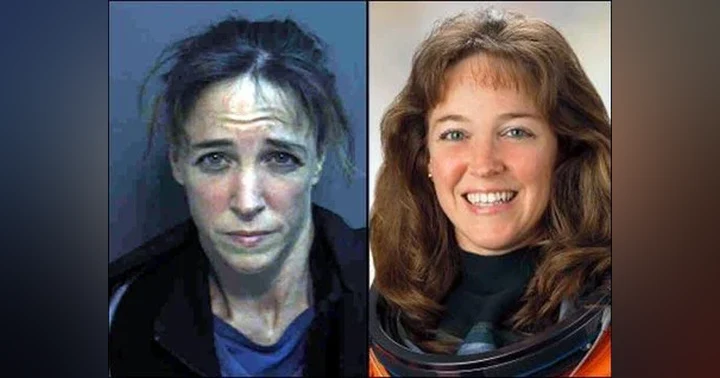
Lisa Nowak



In February 2007, NASA astronaut Lisa Nowak made headlines around the world after driving nearly 900 miles from Houston, Texas, to Orlando, Florida, to confront another woman, allegedly wearing a diaper so she wouldn’t have to stop along the way. Until that pivotal point, Lisa had been known for her remarkable accomplishments. She was a Naval Academy graduate, a decorated naval officer, test pilot, mother of three, and an astronaut who had traveled more than five million miles aboard the Space Shuttle Discovery. But just months after returning from space, Lisa was arrested at Orlando International Airport for stalking and attempted kidnapping.
How did one of NASA’s most accomplished astronauts end up there?
Today's snack: Tang and astronaut ice cream
Support us on Patreon
Sources:
- https://www.youtube.com/watch?v=MA2Ha7xuJSE Colleen Shipman’s victim impact statement
- Fanning, Diane. (2007). Out There: The In-Depth Story of the Astronaut Love Triangle Case. St. Martin’s Press.
- Moore, Kimberly. (2020). Star Crossed: The Story of Astronaut Lisa Nowak. University Press of Florida.
- https://adventurewrite.com/blog1/about/?v=7af787d2dafc Colleen and Bill’s website.
- https://people.com/crime/astronaut-love-triangle-lisa-nowak-15-years-attempted-murder-ex-boyfriend-girlfriend/
- https://www.science.org/content/article/nasa-tackles-drunk-astronauts
0:00 In February 2007, NASA astronaut Lisa Nowak made headlines around the world after driving nearly 900 miles from Houston, Texas to Orlando, Florida, to confront another woman, allegedly wearing a diaper so she wouldn't have to stop along the way. Until that pivotal point, Lisa had been known for her remarkable accomplishments. She was a Naval Academy graduate, a decorated naval officer, test pilot, mother of three, and an astronaut who had traveled more than 5 million miles aboard the space shuttle Discovery. But just months after returning from space, Visa was arrested at Orlando International Airport for stalking and attempted kidnapping. How did one of NASA's most accomplished astronauts end up there? I'm Rich. And I'm Tina.
0:52 Welcome to Love, Marry, Kill. Hey, Rich. Hey, Dina. How are you? I am doing good. How are you? I'm good. Are you excited for today? I am, definitely. We're going to talk briefly about football, and then we're going to move on, and we will not talk about it every episode unless there's some exciting things to talk about. Okay, fair enough. I forgot to take a screenshot, but I bought you a gift. Oh, you did? I don't know if it's a gift. I don't know how to describe it. But last night, I went on to DraftKings, and oh boy, they're not going to become a sponsor because that website is the most confusing thing ever.
1:41 Have you ever gone on there? I don't think I have, actually. It just felt really spammy. They wanted every bit of information about me. Anyway, I placed a bet for you and for me. The Lions, if they go all the way. They win the Super Bowl? If they win the Super Bowl, I'm not sure how much money you'll win, but I think they're actually kind of not favored, but I think they're in good shape. Their odds are probably up there with the top teams, I would guess. I just thought that would be a fun gift for you and a fun thing to do for you and just give you a little more skin in the game. I put $ 100 on the Lions and $ 25 on the Chicago Bears.
2:27 Oh, well, that's nice, too. Yeah, so we'll see what happens. Well, that's awesome. I'm sure we'll be millionaires if we win that, I'm guessing. No, no. I am excited because today is the Lions' first game of the season so that's always an exciting time who are they playing they are playing the new orleans saints. Okay well go lions i guess so enthusiastic so i've been really productive today i did something that i rarely do i got up and worked out before we recorded And I thought it would give me a lot of energy and everyone's going to be like, oh, she's so awake. But no, no, I'm exhausted. Made you want to go back to bed? Yeah.
3:08 My favorite Peloton instructor, Leanne, is back from maternity leave. So I wanted to do her ride to support her. And man, I thought she'd be, you know, no, she was brutal. You thought she'd take it easy on you? Yeah. No. Well, good for you. But if anyone out there is on the fence about getting a Peloton, I mean, it's expensive, but I still really enjoy it. And I think All the workouts on the app are really good too. Yeah, I enjoy it too. I'm a little streaky. Like I'll go for a few weeks and I'll do it and then I'll put it aside for a few weeks. I need to get more consistent, but I do enjoy it. I have a streak, but I have not been very good this summer. I've been very spotty in my workouts, but hopefully in the fall I'll get back to it.
3:50 But I wanted to tell you about a dream I had the other day. This is so dumb. I had a dream that I was a competitive eater. That's hilarious. You know, it was so funny. And I was really pretty good at it. And one of the things I was eating was salad, like spring mix. And I was like, bring it on. But then they brought out, this is so funny and very specific, but they brought out seven loaves of bread. And I was like, oh, no, I can't do it. I'm done. So random and so funny. And normally I have a rule that You can only tell me your dreams for 30 seconds because I hate hearing about people's dreams. But I feel like that one was kind of funny.
4:34 That is a hilarious dream. All right. So you know today's episode is about astronauts and NASA. And you can see the. So we're having Tang. Yeah. I didn't know they still made Tang. Yeah, I didn't either. I was like, well, I'll see if I can find some Tang. And yeah, I was surprised, but it's there. I brought one other thing, too. Do you think you can guess what it is? I don't know, some kind of space meal type of thing? Yeah, I bought freeze-dried ice cream, astronaut ice cream. All right. So do you. Want to try your Tang? Oh, let's give it a try. I had warned you, don't come to the podcast hungry today. All right, well, we'll give it a try. Okay.
5:20 Have you had Tang before? When I was a small child, I think I actually liked Tang. It was kind of a treat. Don't like it now. It's kind of gross. I kind of liked it. It's just sort of stickly sweet kind of, I don't know. I did use the maximum amount. So you can, you know, it's powder and then you mix it with water. And it suggested like one to three tablespoons and I used the three tablespoons. So yeah, but I was surprised how orange it is. It's very orange. It's very orange. Well, I'm ready to go to outer space now. The ice cream was okay. Yeah. Yeah. Didn't really quite stand up to regular ice cream, but it was all right.
6:00 Well, now you know the struggles that astronauts have. Because when you're in space, your taste buds don't work as well. So a lot of times they have to have things that are like ultra spicy or whatever so they can actually taste them. And they have to be really careful about their hydration in space. Makes sense. I was looking for a case that might be a little lighter this week. So that's how we ended up with Lisa Nowak. I'm interested to hear the story. In Houston, Texas on Saturday, February 3rd, 2007, Lisa Nowak, 43, awoke after a restless night. She had the whole weekend in front of her, but felt uneasy, anxious. Her children, twin 5-year-old girls and a 14-year-old son, were with her estranged husband for the weekend, giving her time, too much time really, to think about and obsess over a situation in her life that had, in her mind, become untenable.
6:56 Her husband had moved out about six weeks earlier. It was a time of change and self-reflection. Lisa lived in a comfortable red brick house in a neighborhood full of other NASA families. Lisa was an astronaut who worked at the Johnson Space Center in Houston. Just seven months earlier, Lisa's lifelong dream of entering space had been realized aboard the space shuttle Discovery with six other astronauts. one of the very few people fortunate enough to see the Earth from above its atmosphere. After decades of hard work, having to be the best, excelling with every new challenge, she was lost, spiraling, unsure of who she was, and struggling to find meaning and connection. Lisa's friend, Dr. Laurel Clark, had died aboard the space shuttle Columbia on February 1, 2003, along with six other astronauts. Commander Rick Husband, Pilot William McCool, Payload Commander Michael Anderson, Mission Specialists Kalpana Chawla and David Brown, and Payload Specialist Ilan Rahman. During Columbia's launch, a piece of insulating foam had broken away from the external fuel tank and damaged the shuttle's left wing. The impact of the missing foam had been underestimated. Sixteen days later, as Columbia re-entered Earth's atmosphere, superheated gases penetrated the damaged wing, causing the shuttle to break apart over Texas. The fourth anniversary of the disaster had just passed, and anniversaries were
8:29 hard for Lisa. Laurel was one of her best friends at NASA, and the only woman she had a close friendship with. After Laurel's death, Lisa had inherited eight of her treasured African violet plants. She lovingly propagated over 400 seedlings, an indication of both Lisa's loyalty and intensity. She often gave the plants as gifts to her co-workers. Lisa felt as if the seedlings were keeping a part of Laurel alive, but recently she had been distracted and many of the little plants were browned and wilted from neglect. A few weeks earlier, Bill Opheline, a fellow astronaut that she'd been seeing for a couple of years on the down low, told her that he wanted to cool things off. That wasn't what Lisa wanted. Bill was seeing another woman and things were getting serious. Jealousy consumed Lisa. She thought of little else. She needed to see this woman face to face to confront her. She was single-minded in her mission.
9:30 Lisa printed directions from MapQuest from Houston to Orlando, Florida, where the other woman lived. 13 hours, 48 minutes, 963 miles. Then Lisa went to a sporting goods store where she purchased pepper spray, a BB gun, and pellets. She paid cash for the items. Lisa was an excellent planner. When she had everything she needed, she hit the road. She had a mission, not one sanctioned by NASA, but soon they, along with the rest of the world, would succeed. Lisa's name splashed across the front page of every newspaper in the country. But not because she'd completed another mission to space. This trip was for a much darker personal reason.
10:12 I'm excited to hear this story because all I know of it is basically what you said up front, that she drove all this way with a diaper on. Right, that was the headline. That's the headline that everyone remembers. The space race between the United States and Soviet Union exploded in the early 1960s at the height of the Cold War. Dr. William Randolph Lovelace, who had helped develop the medical tests used to select NASA's first astronauts, wondered whether women might be equally suited for spaceflight. He began testing accomplished female pilots, starting with Jerry Cobb. and eventually put 13 women through many of the same grueling physical and psychological tests given to male astronauts. The women became known as the First Lady Astronaut Trainees, or FLATs. Lovelace was impressed, declaring that certain qualities of the female space pilot are preferable to those of her male colleagues. But the privately funded program was abruptly canceled. NASA had no plans to send women into space. and many within the overwhelmingly male space program believed they simply didn't belong there.
11:24 In 1963, the Soviet Union sent cosmonaut Valentina Tereshkova into space, making her the first woman in space and handing the Soviets a highly visible victory in the space race. The United States would take another 20 years to follow. A month before Valentina was launched into space, Lisa Marie Caputo was born to Alfredo and Jane in Rockville, Maryland, about 20 miles outside Washington, D.C. Jane worked as a biologist and Alfredo as a computer consultant. Lisa had two younger sisters, Andrea and Marissa. When Lisa was six years old in the summer of 1969, she watched Neil Armstrong's first moonwalk. His famous words, that's one small step for a man, one giant leap for mankind, made a big impression on her. She was determined to follow in his steps.
12:20 Her sister Andrea later said Lisa was, quote, the perfect child, but prudish, generally solitary, and always involved in schoolwork or projects. She added that Lisa had difficulty picking up on social cues. Lisa was a stellar student, dedicated to her studies, excelling in the classroom, but also on the sports field, where she ran for the track team and played field hockey. In the spring of 1981, Lisa was named Student Athlete of the Year. She was involved with student government, competed on the math team, and was a member of the French Honor Society. Her senior quote was, She graduated as co-valedictorian from C.W. Woodward High School in 1981. She made it clear that she wanted to join NASA. When told that women couldn't be astronauts, she was undeterred. Lisa knew that in 1978, of the 35 applicants accepted into NASA, six were women. Times were changing. Lisa was accepted to Brown University and the United States Naval Academy, both ultra-selective.
13:36 She wanted to attend Brown and have the typical college experience, but she knew entering the Naval Academy would increase her odds of becoming an astronaut. The Naval Academy is an extraordinarily regimented environment where, as a freshman or plebe, nearly every aspect of your day was controlled. The Naval Academy required a uniform at all times and women's hair to be closely cropped. Plebes were at the very bottom of the Naval Academy hierarchy and were expected to move, eat, speak, and even sit according to strict rules. At meals, they sat erect with their heads up and eyes forward, never allowing their backs to make contact with the chair. They were expected to address upperclassmen as sir or ma'am and memorize extensive Navy history, which they could be called upon to recite at any time. Even walking through campus in a casual manner was not allowed. Plebes were expected to move at a quick pace, known as chopping. The system was intentionally demanding. In addition to a rigorous academic schedule, plebes faced military training, physical conditioning, inspections, memorization, and constant scrutiny from upperclassmen. There was little opportunity to relax or simply blend into the background. The experience was designed to teach discipline, attention to detail, and the ability to perform under pressure, requiring considerable physical and mental endurance. When Lisa
15:09 entered the academy in July 1981, women had been admitted for only five years, and there was still considerable resistance to their presence. Many questioned what, if anything, they could contribute to the program. By graduation in 1985, Lisa was one of only 75 women among the 1,032 members of the graduating class. Women weren't the only group who struggled for a place at the Naval Academy. Black men had been admitted in small numbers for more than a century. They faced intense racism, hazing, and hostility. The first black midshipmen entered in 1872, but it wasn't until 1949 that that Wesley Brown became the first black man to graduate.
15:55 By the time Lisa arrived in 1981, the Academy was making a concerted effort to recruit more minority students, but its student body remained overwhelmingly white and male. The intent of the program was to test the strength of the plebes every step of the way. Only the strongest and most worthy candidates would survive. They were expected to be near perfect, always presentable, never late. Their day started at 6.30 a.m. and didn't end until 6.30 p.m. The day ended with dinner and then study time. The required 18-credit course load was overwhelming, but each passing year at the Academy, restrictions were loosened and life became a little easier. In the summer of 1983, Lisa stood proudly in Florida to see the first American woman, Dr. Sally Ride, be launched into space.
16:48 Do you think you would be a worthy candidate at the Naval Academy? I don't think I could cut it. Oh, I absolutely could not. It just seems so intense, yeah. During her third year at the Academy, Lisa met her future husband, Rich Nowak. President Ronald Reagan delivered the commencement address to Lisa's graduating class. After surviving such a grueling four years, Lisa walked a little taller. A Naval Academy degree opened an extraordinary number of doors, but her goal remained clear. to become an astronaut. Rich went to Pensacola to begin his own career with the Navy, while Lisa's ambitions took her in another direction. She accepted a position at the Johnson Space Center in Houston, Texas, providing engineering support for the shuttle training aircraft. She had a front row seat while more and more women were being launched into space.
17:40 After six months at Johnson, Lisa reported to flight school at the United States Naval Air Station Pensacola. the cradle of naval aviation on the Gulf Coast of Florida, she was honing in on making her dream a reality. Earning a spot in flight school was difficult for anyone, but women faced an additional hurdle. Even after proving they were capable of becoming Navy pilots, federal law prohibited women from flying combat missions, effectively closing off many assignments and opportunities for advancement. The restriction also fueled resentment among some male officers, who questioned why women were being given coveted flight school positions when they were barred from many of the jobs that followed. It was one hurdle after another for a woman who wanted to be an astronaut. It's mind-boggling to me that this was the situation really not that long ago.
18:34 It doesn't feel like that long ago to me anyway. Yeah, we've made a lot of progress, but there's still a lot of progress yet to be made. Absolutely. Absolutely. In 1986, NASA chose Krista McAuliffe, 37, a high school social studies teacher from Concord, New Hampshire, from more than 11,000 applicants, to be the first teacher in space. Once in orbit, Krista planned to teach two lessons from the shuttle that would be broadcast to students across the country. The day of the launch was an unusually cold one in Florida, 38 degrees and windy, the coldest launch on record. The extreme weather conditions caused a rubber seal called an O-ring in one of Challenger's rocket boosters to become stiff and fail to seal properly. Hot gases escaped through the opening, damaging the shuttle's external fuel tank and supporting structure. Just 73 seconds after liftoff, Challenger disintegrated, killing Krista McAuliffe and the six other crew members on board. In the years preceding the Challenger disaster, shuttle launches had become routine, predictable, and safe. The loss of the Challenger was a huge blow and setback to NASA, but President Ronald Reagan vowed to continue his support of the program. Dr. Sally Ride reminded the public that each astronaut accepts the risk of death when they accept a mission. That was true in the early days of the space program, and it's still
20:04 true today. Rocket technology is risky, and those risks are something that every astronaut has to internally come to grips with and be willing to accept. NASA grounded the remaining shuttle fleet until the Challenger incident was thoroughly investigated. It took nearly three years and $ 2. 5 billion before NASA launched Discovery successfully. I think I was in school watching the Challenger live when it disintegrated. Which was pretty shocking. Yeah, I know. It was a really shocking thing. I think a lot of people were watching live and, yeah, schools had it on because here was this teacher going into space. So, yeah, it was really a major tragedy.
20:47 Lisa Nowak was undeterred. She completed and excelled in flight training, first mastering the simulators and then taking to the air. She earned her wings as a naval flight officer, a highly trained member of the flight crew, Responsible for navigation, weapons systems, communications, and other complex operations, rather than physically piloting the aircraft, it was another significant step toward her ultimate goal of becoming an astronaut. We'll be back after a break. Music Lisa and Rich were married on April 9, 1988, in Annapolis, Maryland, in a traditional Navy wedding, complete with the ceremonial Arch of Swords. For most of their relationship, they'd been separated by hundreds of miles, both pursuing their personal goals. Lisa and Rich settled in Oxnard, California, where she joined Tactical Electronic Warfare Squadron 34. Lisa flew aboard the EA-6B Prowler during training missions operating the aircraft's sophisticated electronic warfare systems. She excelled in the role, eventually qualifying as a mission commander and electronic warfare lead, positions that placed her in charge of coordinating complex mission operations and identifying and disrupting enemy radar and communication systems. In 1990,
22:18 the couple was on the move again when Lisa enrolled in postgraduate naval school in Monterey, California. Soon the Berlin Wall fell and the Cold War was over, also ending the space race. In February 1992, the Nowaks welcomed their first child, a son they named Alexander. A month later, Lisa graduated with a Master's of Science degree in aeronautical engineering, followed by an engineering degree in aeronautics and astronautics in the fall. In 1992, the Navy transferred Lisa to Naval Air Station Patuxent River in Maryland, a major center for testing new aircraft and aviation technology. The following year, after applying for the sixth time, she was selected for the prestigious U.S. Naval Test Pilot School. She logged over 1,500 hours on over 30 aircraft. After graduating, Lisa continued working with some of the Navy's most advanced aircraft and also trained incoming pilots. It was another major accomplishment and an important addition to the resume she'd been carefully building toward her ultimate goal of becoming an astronaut. On February 3, 1995, Eileen Collins made history as the first woman to pilot a space shuttle when Discovery launched on a mission that included a historic rendezvous with a Russian space station Mir.
23:42 It was another sign that things were changing. Roles that had once been closed off to women were slowly opening, expanding, what someone like Lisa could imagine for their own future. I know I went deep into the history, but I just wanted to highlight how much work goes into being an astronaut, especially for a woman, because she had to prove herself a little more. Holy cow. Yeah, it's amazing. So many accomplishments. In 1995, NASA opened the application process for a new class of astronauts. After preparing for this opportunity for years, Lisa, now 32, thought she was finally ready.
24:22 She had an impeccable resume, an aerospace engineering degree, advanced graduate degrees, extensive flight experience, and she had graduated from the Naval Test Pilot School. She was one of roughly 3,000 people who applied, all competing students. for one of the most coveted jobs in the world. Months of screening and interviews followed. In April 1996, Lisa finally received the news that she had been working towards for most of her life. NASA had selected her as one of the 35 astronaut candidates. She'd made it. Lisa underwent the psychological screening required of astronaut candidates. NASA needed people who could remain calm and dependable under extraordinary pressure. Candidates completed a standard series of psychological tests, followed by interviews with a psychologist and a psychiatrist.
25:15 Once accepted into the astronaut corps, however, they received annual medical exams, but were not required to undergo routine follow-up psychological evaluations unless concerns arose or an astronaut sought help. Lisa, Rich, and 4-year-old Alex moved to Texas to the Clear Lake area of Houston, near Johnson Space Center. They bought a large, comfortable home and also purchased a nearby condo as rental property. Rich left active duty with the Navy, although he continued serving in the Naval Reserve. He took a civilian job with Barrios Technology, a NASA contractor, and worked as a flight controller in mission control at Johnson Space Center, helping to oversee communications during shuttle missions. Meanwhile, Lisa immersed herself into the rigorous new astronaut training program. During her first month, she completed NASA's swimming test, swimming three lengths of a 25-meter pool while wearing a full flight suit and sneakers, then treading water for 10 minutes. I think I read that this pool is like the biggest pool in the world, maybe, or at least in the United States. And the astronauts have to train in this pool because it's most like the atmosphere of space.
26:32 Yeah, that makes sense. Every time I see a thing where People are training, like whether it's Navy SEALs or astronauts, when they're training in water, it just, it feels so terrifying to me. They just put them in situations that are very stressful. The training covered nearly every situation an astronaut might encounter. Lisa learned land and sea survival, scuba diving, spacesuit operations, and how to respond to emergencies involving extreme changes in atmospheric pressure. She also began regularly flying T-38 jets to maintain her flight proficiency. There was also the infamous Vomit Comet, a modified aircraft that flew a series of steep climbs and dives, briefly producing the sensation of weightlessness. During a single training session, the maneuver could be repeated dozens of times, giving Lisa and the other astronaut candidates their first real taste of what it might feel like to float in space.
27:31 Lisa also trained as a CAPCOM or capsule communicator, the astronaut and mission control responsible for communicating directly with crews in space. She received extensive training to serve as a flight crew medical officer. A medical officer must be prepared to treat benign conditions such as a rash, but also more intense procedures like tooth extractions or an emergency appendectomy. That would be the worst time for your appendix to go out. Wouldn't it? Lisa then advanced to the more complex shuttle mission simulators, where she practiced virtually every stage of a mission, from pre-launch and liftoff, through orbit, re-entry, and landing. She learned to operate the shuttle's systems, handle payloads, and respond to the situations she might encounter during an actual flight.
28:21 She read countless space shuttle manuals and studied astronomy, navigation, and guidance. Orbital dynamics, meteorology, oceanography, geology, physics, mathematics, and materials processing. She was expected to store all of this knowledge and be able to reiterate it at any time. By September 1988, Lisa graduated from an astronaut candidate to an astronaut qualified for flight assignment as a mission specialist. She'd secured her silver wings pin. Gold wings are earned after completing a space mission. An astronaut can wait years to be chosen for a space mission. By 2001, Lisa was 38, and as badly as she wanted her chance to go into space, she also wanted to expand their family.
29:09 After suffering two heartbreaking miscarriages, Lisa became pregnant with twin girls. She gave birth to Alyssa and Katrina in October. While pregnant, she worked Capcom for an April 2001 mission and helped install a new robotic arm to the space station. On June 20, 2001, Rusty Yates was at work at Johnson Space Center when his wife, Andrea, called and told him to come home. Andrea, who suffered from severe postpartum psychosis, had drowned their five children, ranging in age from seven years to just six months, in the bathtub of their Clear Lake home. The tragedy sent shockwaves through the NASA community.
29:51 Rusty worked long hours while Andrea struggled with both her illness and the demands of caring for five young children. It was a devastating reminder that the extraordinary commitment required by the space program could place tremendous demands not only on its employees, but on their families as well. Lisa continued to focus on reaching space one day. Her schedule was grueling, often traveling to other countries for lengthy missions, including Russia, Canada, and Japan. In December 2002, NASA announced its upcoming missions for 2003, along with their flight crews. Lisa Nowak was among the six people chosen to man Columbia on November 13th. The scheduled mission increased Lisa's already heavy workload at NASA more than 70 hours a week.
30:41 I have no idea how Lisa was able to stay afloat. She has three kids at home. The twins are one year old at this time. Yeah, that's really insane with that workload. And I think Rich's job was also pretty demanding. Yeah, I'm sure it was. Super busy. They had help. but still. Yeah, that's a lot. Barbara Morgan was assigned to the same mission as Lisa. She was the first teacher since Krista McAuliffe's death during the Challenger tragedy of 1986 to join the crew. She would fulfill Krista's mission of teaching students from space. 2003's first mission launched on January 16th. During liftoff, a one-and-a-half-pound piece of insulating foam broke away from the external fuel tank and struck Columbia's left wing, damaging the protective heat shielding. The extent of the damage wasn't realized at the time. On February 1st, as Columbia re-entered Earth's atmosphere, superheated gases penetrated the damaged wing and began destroying it from the inside, melting the shuttle's interior metal framework, including sensors and the landing gear. Upon re-entry, parts of the ship can reach 2,800 degrees Fahrenheit. making the insulation critical. Mission Control, along with the astronauts aboard Columbia, searched calmly through their binders for a solution, but there simply wasn't one, and although they'd crossed back into the Earth's atmosphere, they were still too high to eject from
32:12 the ship. At 8 a.m., Mission Control lost all contact with Columbia. The instrument panels stopped communicating, as did the astronauts, mid-sentence. The astronauts likely knew something was very wrong, but lost consciousness before the shuttle broke apart over Texas due to the increased G-force inside the cabin. The remains of all seven astronauts were eventually located. Lisa was at home watching in horror as the tragedy unfolded with her nine-year-old son by her side. The loss was deeply personal for Lisa. Columbia was the shuttle she was scheduled to fly aboard later that year, and three members of her own astronaut class, Michael Anderson, Kalpana Chawla, and Laurel Clark, were among the seven astronauts killed. They had entered NASA together in 1996 and went through astronaut training side by side. Lisa's upcoming mission was scrubbed, but to her, that was secondary to the loss of her close friend Laurel Clark. In the weeks that followed, Lisa mourned Laurel, while doing what she could to support her family through their grief, spending more time with Laurel's son than her own children. Columbia's loss also left NASA facing an enormous practical problem. The shuttle program was more than 20 years old. The fleet was aging, and NASA had no replacement spacecraft ready to take its place, or the budget to build a new one. The three
33:44 remaining shuttles, Discovery, Atlantis, and Endeavour, were grounded while NASA investigated the disaster and made the safety and engineering changes required before anyone could fly again. The future of the shuttle program, and of the astronauts who had devoted their careers to it, was suddenly uncertain. The loss of Columbia was devastating on every level. Years of work and billions of dollars had been invested in the shuttle program, but none of that compared to the devastating loss of seven lives. NASA understood that a tragedy of this magnitude could take a serious psychological toll. Astronauts were selected and trained to remain composed under extraordinary pressure, to compartmentalize fear and emotion, and focus on the task at hand. Those qualities could save lives during a crisis, but they could also make it difficult to acknowledge when they were struggling. During this difficult period, Lisa leaned heavily on her fellow astronauts for support.
34:46 especially William Opheline, better known to his friends as Billy or Billy O. He lived in Seabrook, Texas, about 40 minutes southeast of Houston. William Opheline was born in Virginia in March 1965 to Billy and Randall Opheline. He grew up alongside his older brother, Randall Jr. Randall Sr. served in the Air Force and passed his fascination of aviation down to his sons. They both became pilots. After the family moved to Anchorage, Alaska in 1975, Bill and his brother loved exploring the Alaskan wilderness. Billy began flying at 14, earning his license at 19. After high school, he studied electrical engineering at the University of Alaska, eventually graduating from Oregon State University, where his girlfriend, Michaela Davis, was attending school.
35:40 They married in 1988, the same year Billy entered Naval Aviation Officer Candidate School. He and Michaela had two children, Bud and Kristen. Bill went on to become a fighter pilot, serve during the Gulf War, attend Top Gun, and graduate from the Naval Test Pilot School. By 1998, Bill, 33, had logged about 3,000 flight hours in 50 different aircraft and completed more than 200 carrier landings. That June, NASA selected him as one of 25 members of its newest astronaut class. He became the first astronaut from Alaska and was scheduled to launch into space in July 2003, but his mission was postponed for three and a half years after the Columbia incident. He worked at Johnson Space Center where he became close friends with Lisa Nowak. In January 2004, Lisa and Bill were sent with a small group of astronauts to northern Quebec for cold weather survival training. After several days training with the Canadian military, The group was dropped into the snowy wilderness, carrying only what they could fit in their backpacks. For more than a week, they hiked miles through the snowy backcountry by day and made camp each night.
36:58 Some of the training for these astronauts, I'm like, why are you torturing these poor people? It seems they were hiking like 10 miles a day in the cold and without any structure to sleep in. They just had to sleep. Or make their own Yeah, probably not the type of situation they're going to run into in space. But I think the point is just to put them in super high pressure situations and stressful situations to make sure they can handle it, I guess. All of this grueling training, though, comes at a pretty steep cost for the astronauts. Yeah, I mean, psychologically, I'm sure, and physically. The intense experience brought Lisa and Billy closer together, strengthening a friendship that had already developed during their years working together at Johnson Space Center. During this trip, their friendship developed into an intimate relationship. In November 2004, Lisa finally received another flight assignment. She was named a mission specialist aboard Discovery to deliver supplies to the space station. Lisa was responsible for operating the robotic arms aboard both Discovery and the International Space Station, including equipment designed to inspect the shuttle for damage. After waiting nearly a decade to reach space, Lisa once again had a mission to prepare for. In early 2005, Michelle Opheline suspected there was trouble in her marriage.
38:22 Bill had become cold and distant and developed a hair trigger with her and the children, although he insisted there was nothing wrong. She discovered the source of her husband's animosity when she found intimate emails between Bill and Lisa Nowak. She filed for divorce in February. the same month that Bill was announced as pilot for a mission in late 2006. He moved out of the family home into a small apartment nearby. Lisa became such a frequent visitor here that Bill's neighbors thought she lived there and they were a couple. The divorce was finalized by May. Although Michaela had learned of the affair and acted, Rich Nowak was none the wiser.
39:03 Bill resented that Lisa's marriage was still intact while his had ended, and he encouraged her to leave her husband, but she wasn't ready. On July 26, 2005, Discovery finally lifted off, the first shuttle launch since the Columbia disaster, nearly two and a half years earlier. NASA had spent that time investigating the accident and making extensive safety improvements. But during the the launch, cameras captured something deeply concerning. Pieces of insulating foam once again broke away from the external fuel tank, including one large piece measuring roughly three feet long. This time, thankfully, the foam didn't hit the shuttle, causing damage. But when Discovery and its crew returned safely to Earth, NASA wasn't willing to take another chance and grounded the shuttle again while engineers tried to understand why the foam insulation continued to be a problem. Lisa's mission was again scrubbed.
40:04 I actually remember this time. I do too, yeah. It just seemed like every single time they wanted to launch or they went out, like the foam just... kept falling off. It must have been so frustrating to be a part of NASA during that time. I remember when this specific mission was returning to Earth, it was a very stressful time. Everybody was on edge. Are we going to have another disaster. Or is it going to make it? Imagine being on that flight. We know every astronaut seriously does know that there is a chance that they might not make it back to Earth when they go on a mission. Being in that situation, though, that's a whole other level of Really scary stuff. In an interview with Florida Today in 2005, Lisa was asked how she balanced being an astronaut with motherhood. She acknowledged that early in her career, she had actually been advised against having children, but chose to anyway. She credited Rich for supporting her career and pushed back against the different expectations placed on mothers and fathers. Quote, Sometimes people question why a mother would consider this type of job with young children, but I notice most don't seem to have a problem with fathers in the same position.
41:17 Lisa said she wanted her children and other young people to see that it was possible to have a challenging, rewarding career while still being someone your family could count on. Her advice to other women was practical. Don't put off having children indefinitely. Make time with them a priority, and when possible, pay someone else to handle things like housework and yard work so that limited time could be spent with family. We'll be back after a break. In February 2006, NASA announced a target launch date for Space Shuttle Discovery's next launch, May 10th, Lisa's 43rd birthday. However, bad weather pushed the mission back to July. as NASA continued addressing problems with the external fuel tank. There was disagreement over whether Discovery should launch. NASA's chief engineer and top safety official recommended another delay, concerned that foam could once again break away and damage the shuttle. NASA administration ultimately approved the launch, pointing to new procedures that allowed the crew to inspect Discovery for damage in orbit. and if necessary, remain aboard the International Space Station while NASA prepared a rescue mission. It's tradition for space shuttle crews to have a pre-launch party. On Thursday, June 29, 2006,
42:49 nearly 200 people gathered in Lisa's honor at the Kennedy Space Center, hosted by her parents, Jane and Alfredo Caputo. Friends from different periods of her life came to celebrate with her, along with Rich, their three children, her sisters, and extended family. Two elderly great-aunts sent Lisa an angel pin that had been blessed by their priest. Lisa and the crew were strapped into Discovery and ready to go on July 1st, but thunderstorms near the launch site forced NASA to scrub the flight. The same thing happened the following day when bad weather once again prevented the launch. The new date was set for July 4th. Just before launch, inspectors discovered a small crack in the insulating foam. NASA engineers determined that condensation and ice had contributed to the damage, but after a close inspection, they concluded the remaining foam was secure and Discovery was safe to fly. Being the first launch since the Columbia tragedy, all eyes were on Discovery.
43:53 At 11.42 a.m., the astronauts were strapped inside. Steve Lindsay, Mark Kelly, Lisa Nowak, and Mike Fosum on the top deck, Stephanie Wilson, Piers Sellers, and Thomas Ryder on mid-deck. It was a 44-hour flight to the space station. At 2.38 p.m., Discovery lifted off. Lisa's four-year-old twins had mixed reactions. Alyssa smiled, waved, and shouted, Bye, Mom! while Katrina cried and yelled, No shuttle! Mama, come down! Not long after launch, cameras detected several small pieces of debris breaking away from the external fuel tank, including a piece of foam that appeared to strike the underside of Discovery. The images were concerning, but the debris had broken away late enough in the ascent that it didn't pose a danger. Lisa served as Discovery's flight engineer during the ascent. sitting behind and between the commander and pilot, and helping coordinate the flight. Despite years of training, her first experience in space wasn't entirely pleasant. Lisa struggled with nausea as her body adjusted to weightlessness, while other members of the crew experienced headaches and congestion as fluids that normally settled in the lower body shifted towards their heads.
45:15 Food can taste different in space. Without gravity, fluids shift automatically, toward the upper body, causing congestion that can dull an astronaut's sense of smell and taste. As a result, some astronauts develop a greater appreciation for spicy or strongly flavored foods. And Discovery was carrying a special delivery. Chef Emeril Lagasse worked with NASA to create several dishes for the International Space Station, including jambalaya, mashed potatoes with bacon, and spicy green beans with garlic. During the mission, Lisa was able to video chat with her husband and children. At 9.14 in the morning of July 17th, Discovery made a picture-perfect landing at Kennedy Space Center after traveling more than 5 million miles and spending nearly 13 days in space. Lisa and her fellow astronauts were welcomed home by family and friends.
46:06 Lisa told reporters, It was a great flight. We had a lot of fun. We did do a lot of challenging robotic operations and a lot of other things, too. But of course, robotics is something we did almost every day. Stephanie and I, as the robo-chicks, enjoyed doing those on the space station side. A lot of her duty there was to operate this robotic arm to install it and operate it. The crew was thrilled with the success of the mission, but after nearly 13 days of sponge baths, rinseless soap and shampoo, a long hot shower back on Earth, must have sounded pretty good. When Lisa entered her neighborhood, she received a hero's welcome. Her neighbors had decorated her street with patriotic streamers and balloons. President George W. Bush called the crew to congratulate them on their mission and to invite them to the White House.
46:57 That must have been such a great feeling to get back to Earth safely. Well, it is, but after returning to Earth, Lisa struggled. The excitement and purpose that had driven her for so long were suddenly gone. She'd spent most of her life working toward the goal of getting to space, and now she had accomplished that. She wondered what was next for her. She knew another space mission was unlikely, and her marriage to Rich was also crumbling. In November, neighbors heard the sound of dishes and other objects breaking inside the Nowak home. As things grew more difficult, Lisa became increasingly focused on Bill, who was busy preparing for his own flight aboard Discovery. The affair with Bill was cooling off. Lisa could feel his interest dwindling. Suddenly, he didn't have time for her.
47:45 Her calls and texts went unanswered for days. Bill hadn't told Lisa yet, but in November, he'd met a new woman, 30-year-old Air Force Captain Colleen Shipman, born in January 1977 in Beaver County, Pennsylvania. In high school, Colleen was an excellent student, a gymnast, ran track, and played volleyball. While at Penn State, she enrolled in ROTC. She majored in chemical engineering and German. Later in life, she discovered a love of Irish dancing. After graduation, she worked at Wright-Patterson Air Force Base outside of Dayton, Ohio, as an engineer. I used to live right next to Wright-Patterson.
48:26 Yeah. Later, she transferred to Patrick Air Force Base near Cape Canaveral, testing hardware for space flights. In her free time, she took flying lessons. Sometimes her work took her to the Kennedy Space Center, where she met Bill O'Falline weeks before his mission at a party in celebrating his upcoming mission. Sparks flew immediately between them. He told Colleen that he was entangled with another woman, but he'd break it off so they could make their relationship exclusive. She later told NBC News, quote, he was just a charming, handsome, very polite man. And he started talking to me. Weeks later, she asked, the other woman knows it's over. You made it clear?
49:11 Yes, he replied. I was very clear. I want to be honest with you about my past. I don't want to screw this relationship up. Bill had, in fact, not been honest with Colleen Shipman or Lisa Nowak. Lisa was assigned as one of the CAPCOMs for Bill's December mission. Short for Capsule Communicator, the CAPCOM serves as the voice of mission control, relaying information and instructions to directly to the astronauts in space. It meant that while Bill was aboard Discovery, Lisa would sometimes be the voice he heard from Houston. In December 9, 2006, Bill launched into space on Discovery for his first and only mission to space. Lisa was not invited to the customary dinner and reception before the flight. Colleen was by his side instead. The mission was a success. Bill rode excitedly to students at his old elementary school in Alaska. Quote, the launch was 10 times more exciting than I thought.
50:12 The sights and sounds and sensations were literally out of this world. You shake a lot when the solid rocket boosters ignite. Then you get pressed into your seat pretty hard as you accelerate up to speed when you need to stay in orbit. Lisa communicated with Bill professionally from Mission Control. Colleen and Bill continued their relationship privately, exchanging flirtatious emails and I love yous. On December 20th, Colleen emailed Bill in space, quote, Will have to control myself when I see you. First urge will be to rip your clothes off, throw you on the ground, and love the hell out of you. Am anxious to get you alone, but honestly love, I want you to totally and thoroughly enjoy your hero's homecoming. So happy for you. I'll be here for you.
51:01 I'm a little surprised to hear that there was an ability to communicate via email between astronauts in space and people on the ground. I would think any communication would be monitored or overheard by mission control. Your email was still private. When Bill returned to Earth, Lisa was ready to go full throttle on their relationship. Her husband had moved out, removing what she believed had been the biggest obstacle between them. But Bill was evasive, largely dodging her calls and texts. Whatever Lisa believed was still possible between them, Bill was telling Colleen something very different. When Colleen asked him about Lisa, he reassured her, She's still a good friend. She's happy for me that I've fallen in love and am happy. Colleen responded, Are you sure she's okay with this? There are going to be some crazy ladies showing up at my door trying to kill me. No, no, no, Bill insisted. She's not like that.
51:58 She's fine with it. She's happy for me. That's pretty prescient, I guess, huh? Yeah. Bill went to Colleen's family's house with her on Christmas, at times sneaking away to call or text Lisa who still had no idea about his new relationship. In fact, she wrote a letter to Bill's mother. Dear Mrs. Opheline, thank you so much for your wonderful and encouraging notes to me. I enjoyed sharing the amazing experience of my mission with you from space in July. The past few years have been wonderful and challenging in many ways. Bill is absolutely the best person I've ever known and I love him more than I know possible. Your kindness of supporting us, even under such circumstances as have existed in the past, is nothing short of extraordinary. Fortunately, the past situation is finally coming to a close with formal separation and separate living arrangements accomplished and I am in the process of completing all the official divorce paperwork. It is long overdue. But it is finally here and I'm very much looking forward to getting to know you even better.
53:01 It has been my privilege and honor to receive such special caring from you, especially since my parents are not as supportive right now. It really matters a lot to me to have you, another mom to look up to. Thank you so much for being there for me. Love, Lisa. It must have been very strange for them to get this letter. Oh yes, I think it was very awkward. Finally, after the new year, when he and Colleen had decided to make their relationship exclusive, Bill had a conversation with Lisa. He told her that he'd fallen in love with another woman and whatever they'd had was over. He believed that she took the news well. With a cat out of the bag, Bill placed a photo of his new love on his desk. Bill was walking on air. He'd never been so in love. He was proud of his new girlfriend and couldn't wait to spend every moment with her.
53:51 There were even plans in the works for Colleen to leave the Air Force and relocate to Houston. Bill and Lisa continued to work closely and often flew together to get their hours in. They still spent time together out of work too. Running, biking, and even eating meals together. In Bill's mind though, he'd done everything right. Lisa knew where they stood. They were just friends. But Lisa had not given up on their relationship. She was sure she could win him back. She had a plan. She needed to confront the other woman in Orlando. Lisa became consumed with winning Bill back. She was sleeping only two or three hours a night and barely eating.
54:32 Within a matter of weeks, she lost 20 pounds, leaving her already thin frame noticeably gaunt. She lost focus. She was pulled over three times by police for distracted driving. Bill still shared his schedule with Lisa. Astronauts frequently traveled for speaking engagements, especially after returning from space. Lisa knew that on January 23rd at 1230, Bill had a meeting. She slid into his apartment to do a little investigating. He had given her a key months ago. Lisa found the details of a flight Bill had scheduled for Colleen on February 5th and took note. She jotted down Colleen's phone number and address. Then she logged into his email account and downloaded some very personal messages between the couple that she later printed out. Each astronaut brings a unique skill set to a mission. Among Lisa's strengths were her determination, organization, and attention to detail. In the days before she left for her Orlando mission to confront Colleen Shipman, Lisa had meticulously planned the trip. As she gathered supplies for the trip, she checked them off a list. The items included a wig, a trench coat, a BB gun, a mallet, rubber tubing, latex gloves, plastic bags, and astronaut diapers, also known as maximum absorbency garments. She withdrew cash, then studied maps of Orlando,
56:03 familiarized herself with the airport and the parking situation, and found Colleen's address. She had 67 pages of directions from MapQuest. Lisa made a reservation for a hotel in the Florida Panhandle. She would need to sleep. She requested a few days off of work and then packed up her car before hitting the road for her 950-mile, 15-hour journey, leaving her cell phone behind so her movements couldn't be traced. As Lisa started her drive to Orlando on Saturday, February 3rd, Bill and Colleen were spending the weekend together. He had picked her up from the airport on Thursday. When Colleen saw Lisa's bike still in Bill's apartment, she told him that the situation made her uncomfortable. He said he would get rid of the bike, which he did, but the next night in bed, he called Colleen Lisa. Ooh, that's bad.
56:58 Lisa drove nine hours without stopping before arriving at a day's end to sleep. She registered under the name Linda Turner and paid cash. On February 5th, she checked into a La Quinta Inn in Orlando and then drove to the airport after midnight. Colleen's flight was scheduled to land at 1.05 a.m. Lisa, wearing a trench coat, wig, and dark sunglasses, hung in the shadows, waiting to catch a glimpse of her at baggage claim. At 1.22, Lisa saw her making her way to the carousel. Colleen was thinking only of crawling into her bed as she watched for her suitcase. She propped her tired body against a column and stood watching the other passengers grabbing their possessions. When her luggage didn't come out, she went to the office where they told her that it would arrive on the next plane at 3 a.m. She could wait or they would drop it off at her apartment in the morning.
57:56 She elected to wait. She went to Starbucks and ordered a hot chocolate and a Danish. Lisa followed and ordered a coffee. Colleen fell asleep in a chair under Lisa's watchful eye. At 3.25, Colleen roused. She picked up her suitcase and then boarded a shuttle to the parking area. Blue Section B, she told the driver. Lisa, wearing her trench coat tightly cinched with her collar turned up, still wearing dark sunglasses, boarded behind her. Despite Colleen's exhaustion, she noticed the strangely dressed woman. She had seen her at Starbucks, too. Her eyelids grew heavy in the warmth of the shuttle bus.
58:38 The rhythmic swish of the windshield wipers were lulling her to sleep. When they reached her parking section, Colleen grabbed her bag and departed. The woman with the bushy hair stayed on the bus, but moments later, Colleen quickened her pace as she heard footsteps approaching her from behind. She found her car and threw her suitcase in the back. Grateful that the day was almost over, she started her car and began putting it in reverse when a woman sharply rapped on her window. jarring her, wiggling the door hand Can you help me, please? My boyfriend was supposed to pick me up and he's not here. I've been traveling and it's late.
59:27 Can you please give me a ride to the parking office? No, if you need help, I'll send someone to you. Colleen began backing up her car. Can I use your cell phone? The battery is dead. It wasn't true, but she wanted to get away from this woman. Please roll down your window. I can't hear you. Please roll down your window. Feeling empathy for the abandoned woman, Colleen lowered her window. The stranger quickly thrust her hand inside her car and unleashed a violent burst of pepper spray. Colleen's eyes, nose, mouth, and throat felt like they were on fire. She was gasping for air, forcing her eyes to stay open as she stepped on the gas and headed for the exit of the parking garage, leaving the woman in her wake.
1:00:14 She told the attendant in the booth about the attack. The woman kindly handed her two moist paper towels to press to her eyes and called the police. The airport police arrived quickly. After Colleen gave them a description of the woman, they began searching the levels of the parking deck. They found her and cuffed her. A detective from the Orlando Police Department began questioning Colleen. He asked if she knew a woman named Lisa Nowak. Yes, my boyfriend has a friend, an astronaut with that name. Colleen, her eyes still watering, began to piece things together. Is that who attacked me? After he confirmed the news, Colleen asked if she could call Bill. He didn't answer, but she left him a message telling him about the attack and that she was safe. The woman the officers had cuffed wasn't wearing a trench coat. They weren't sure they had the right person. When asked for identification, she foraged through her duffel bag and they saw a rumpled trench coat inside.
1:01:16 They placed her in the back of their car and drove her to the office where Colleen was being treated by paramedics. Despite her red, teary eyes, she instantly identified the woman as her attacker. They checked the attacker's bag and found a small sledgehammer, a buck knife, several feet of clear tubing, NASA patches, a crumpled receipt from the day's inn, a BB gun, a zip drive, and a floppy disk. The police would quickly learn that the woman they'd cuffed was an esteemed member of NASA, Lisa Nowak. She seemed disoriented and even said aloud, How could this be happening to me? Detective Chris Becton of the Orlando Police Department questioned Lisa. She insisted that she had only wanted to talk to Colleen. She remained stoic and tight-lipped.
1:02:06 He later described the interview as the hardest in his 25-year career, a chess match, he said. He knew Lisa was smarter than him, and it was hard to stay ahead of her. Lisa categorized her relationship with Bill as more than a working relationship. but less than a romantic relationship. She admitted that after discovering that Bill was involved with Colleen, Lisa started making plans to travel to Orlando, knowing Colleen would be arriving on an early morning flight from Houston. She admitted that she wanted to confront Colleen, but insisted she never intended to hurt her. She only wanted to frighten her enough that she would agree to talk. She wanted to know where Colleen stood with Bill, if she wanted something long-term. Detective Chris Becton was skeptical, particularly given the new steel hammer and BB gun Lisa had brought with her. Lisa claimed the BB gun was only meant to coerce Colleen into speaking with her. It took eight hours of questioning before Lisa admitted where she had left her car. It was at the nearby La Quinta Inn.
1:03:12 When police searched it, they found two used NASA diapers, six pairs of latex gloves, garbage bags, discarded packaging for the knife and pepper spray, an unused CO2 cartridge for the BB gun, a shuttle bus schedule, a love letter written from Lisa to Bill Opheline, pages of emails between Bill and Colleen Shipman, 69 orange-covered pills that were not a controlled substance, MapQuest directions from Houston, Texas to the Orlando International Airport, several Orlando-area maps, and a piece of paper with Colleen's home address and written directions, complete with GPS coordinates. The detectives were particularly confused about the diapers.
1:03:59 They didn't know they were adult diapers and feared that she had brought a child with her. When they questioned Lisa about them, she said that she had worn them so she wouldn't have to stop to use the bathroom. Astronauts wear specially designed diapers, officially called Maximum Absorbency Garments, or MAGs. during launch and re-entry because they can spend hours strapped into their seats without access to a bathroom. Once in microgravity, fluid also shifts from the lower body toward the chest and the head, causing the body to produce more urine than it normally would. They are known to be the most absorbent diaper made of the finest materials.
1:04:40 The items collected from Lisa's vehicle were enough to make law enforcement believe her intent was nefarious. She planned to kill and dismember Colleen. She was booked in the Orange County Jail for attempted kidnapping, attempted vehicle burglary with battery, destruction of evidence and battery. She was kept away from the other inmates in protective custody. NASA sent officials to Florida to help Lisa. She had the dubious distinction of being the first NASA astronaut arrested. She wasn't the first that had ever been in trouble. However, NASA worked hard to protect the image of their astronauts, who they like to present a squeaky clean image. We'll be back after a break.
1:05:32 Colleen was badly shaken. She tried calling Bill again, and this time he answered, comforting her and promising he'd be there soon. In the coming days, Colleen filed a restraining order. In the paperwork, she claimed that Lisa had stalked her for two months. She wrote that investigators told her that Lisa was extremely unstable and feels like a scorned woman. But by February 5th, Colleen requested that the restraining order be dropped. The next day at her first court hearing, Lisa seemed deeply embarrassed, wearing a prison jumpsuit. She hung her head, didn't make eye contact, and spoke to the judge in hushed tones. Her attorney argued that the charges against her were an egregious overreach and pleaded with the judge to give her bail and allow her to return to Texas to her job with NASA. The judge set Lisa's bond at $ 15, 500 and ordered her to wear an ankle monitor, allowing her to return home to Houston while the case was pending. The judge cautioned Lisa that she must not have any contact with Colleen Shipman. But before Lisa could be released, prosecutors added a far more serious charge, attempted first-degree murder. If convicted, she faced up to 30 years in prison. Lisa was brought before the judge for a second hearing that afternoon. Her bond was increased to $ 25, 500, which she posted. She was released later that day, spending the night at an airport hotel before heading back to
1:07:04 Houston in the morning. Her attorney hired a public relations expert to handle the press in an attempt to save Lisa's reputation. Bill went to Florida to comfort Colleen and be interviewed by the Orlando Police Department detective, Michael Maresci. The questioning made him feel like he was in the hot seat. What is your relationship with Colleen Shipman? I consider Colleen Shipman my girlfriend. And how long has that been your relationship with her? What you can consider my exclusive girlfriend, meaning a serious relationship, about a month. We met each other about three months ago. I told Lisa that I'd met Colleen and I had fallen in love, and I was wanting to pursue an exclusive relationship with Colleen.
1:07:48 How did she react to that? She seemed a little disappointed, but she seemed to be accepting of that. Did she continue to call you? Daily. I wasn't always receptive to the phone call. Would she leave messages? Yeah. How did the messages seem? They were nice and extremely friendly and not adversarial, just indicative of the type of person she is, just a friendly person. So from the time you told her about Colleen until today, was there anything that was out of the norm for her behavior towards you? Nothing. She seemed accepting of my position with Colleen. She wanted to maintain a close friendship. We had an event we were going to be in together, the MS-150 bike ride in April, and we had agreed to train on that together. We tried to go to the gym together to work out and get in shape for the ride.
1:08:38 When investigators asked Bills who defined what his relationship with Lisa had been, he struggled. Well, I, yeah, I don't, it's hard to consider her a girlfriend. She was an ex. I, I wouldn't, she was an ex-interest, I guess is what I would say. Yes, we had a relationship, but you know, I never really said the word girlfriend. You said earlier that you consider Lisa your best friend in the program. Yeah, I would consider Lisa one of my best friends at NASA. We do a lot together. Would she consider you the same way?
1:09:20 I would say she probably considers me, if not her best, one of her best friends as well. Looking back now on the last few weeks, do you have any theory as to why Lisa did what she did? I would have never predicted this. Her behavior indicated to me that she was stable and accepting of what I told her with Colleen. She had actually wished me a nice weekend, knowing Colleen was going to spend it with me. We made a plan to go flying, and we had made a plan to fly together, I believe, Wednesday, tomorrow. Would you describe her as violent? No, no. No opus that you've ever seen from her? No, never. She seemed extremely level-headed and non-emotional. She didn't flare up. She didn't have a temper. I'm trying to remember ever seeing her even angry, and I didn't ever see her even angry in the years I've known her.
1:10:11 When NASA head Michael Griffin was on Capitol Hill for budget hearings, he was asked to answer for Lisa's mental breakdown falling through the cracks. Griffin defended the astronauts in the program but acknowledged that Lisa was going through a challenging time. He countered that she was the first astronaut in his 30 years with the organization that had ever had an issue. He made it clear that there was help available for anyone in NASA that was having mental health struggles. The problem that Griffin didn't acknowledge, however, was that among astronauts who were hoping to be launched into space, seeking help could be used against them when selecting who would be given the next mission. In the event that an astronaut did happen to lose it in space, NASA had a contingency plan. Crews carried a 1,000-page binder covering almost every emergency imaginable. If an astronaut became a danger to themselves or the crew, The instructions called for restraining their wrists and ankles with duct tape, securing them with a bungee cord, and if necessary, administering a tranquilizer or antipsychotic medication such as Valium or Heldol.
1:11:24 That sounds pretty similar to what they did on a commercial flight pretty recently. That was a wild story. After her arrest, Lisa became a pariah. the ladies' home journal removed an article featuring her from their Mother's Day issue. She became the butt of many jokes on late-night TV, and her name was featured in all of the supermarket tabloids. Although many also came to her defense, including her former astronaut classmate John Harrington. Quote, Like anybody else in the class, she didn't stick out. She was a dedicated, hard-working person. Unfortunately, the attention surrounding Lisa minimizes what she accomplished. Last year, she hopped aboard the space shuttle, not knowing if she would come home, and you can't minimize the risk that she's willing to put forth. Although some astronauts called her prickly and hard to get to know. One accused her of being single-minded as to her own success and not a team player.
1:12:22 He said, Lisa had a difficult time finding her way around the community here. Mark Kelly, Mr. Gabby Giffords, called Lisa introverted, quote, She kept to herself a lot, but she was a smart, hard worker who prepared well. If she was going to do a job, she was going to do it right. But I do not think she's a good team player. She exhibited bad expedition behavior because she was selfish. She would only do the tasks in her mission description and never went out of her way to help other crew members. Mark added as an afterthought to soften his words, she's a good mother. But for some reason, Rich told my sister-in-law that I was Lisa's best friend. I don't even like her.
1:13:05 That's a little harsh. I'll say. The parishioners at her church prayed for her when she was in space and they prayed for her now that she was in trouble. Lisa's family released a statement saying that they were saddened and extremely concerned by the allegations and that their primary focus was Lisa's health and well-being. They described her as a caring and dedicated mother and said the events were completely out of character and had come as a tremendous shock to the family. They asked the public to keep an open mind while the facts were emerging, adding, We are anxious to allow the facts to develop so that we can better understand what happened and why. Lisa's sister, Andrea Rose, told People magazine, We knew Lisa was under a lot of stress, but there is no way of knowing how a particular person will react to stress. We love Lisa and we're worried about her well-being. Andrea said that the deaths of her friends aboard Columbia had deeply impacted Lisa. that she'd never gotten over it. When Lisa returned home to Houston, news vans lined her street trying to get a peek of her.
1:14:10 Her friends and neighbors were protective of her, delivering her meals or whatever she needed. Lisa's favorite local restaurant held a fundraiser in honor to raise money for her legal defense. On March 2nd, prosecutors declined to pursue the attempted murder charge against Lisa, concluding there wasn't enough evidence to prove her intent in a trial. Lisa was relieved to learn that the attempted murder charge was off the table, but she still faced serious charges including battery, attempted kidnapping and burglary with assault using a weapon, which carried the possibility of life in prison. Her trial was set for July 30, 2007.
1:14:51 Days after the murder charge was dropped, Lisa's contract with NASA was officially terminated. She would return to the Navy, however, to work as a curriculum developer, at the Naval Air Station in Corpus Christi. At the end of May, Bill Opheline was told that his contract with NASA was also over. He hadn't explicitly broken any rules, but the scandal and attention surrounding his personal life had become a distraction for an institution that placed high value on professionalism and its public image. They both also faced the possibility of a court-martial from the Navy. Despite her arrest and dismissal from the astronaut corps, Lisa received one final honor from NASA.
1:15:33 In June 2007, she was awarded the Space Flight Medal for her work aboard the shuttle the previous year, despite some criticism that her name should have been removed from the list. As prosecutors and Lisa's defense team began battling it out in pre-trial hearings, information about the evidence collected during the investigation leaked to the public. Inside Lisa's car, they found pepper spray knives, a mallet, and a BB gun, as well as makeup, tampons, and contact lenses. She was also carrying mementos from Bill's December spaceflight, including a magnet and a commemorative coin. Investigators examined two flash drives and a floppy disk found in the car. Most of the files on the flash drives were mundane, including NASA documents, family photographs, and thousands of work-related spreadsheets. But the floppy disk was another story. It contained 16 images, 15 of them depicting a partially undressed woman, many involving bondage or women in astronaut sleep garments. Police could not identify the woman in the images or even establish that the floppy disk could actually belong to Lisa. None of the three storage devices contained evidence directly connected to her trip to Orlando, suggesting they may simply have already been in the car when Lisa left Houston. She was known to be a bit of a pack rat, and I think this actually was her husband's car, so it's possible that it belonged to him.
1:16:58 The floppy disk detail is very strange. Weeks before her trial was set to take place, Lisa considered an insanity defense. Two Houston psychiatrists evaluated her mental health. They diagnosed her with several conditions, including obsessive-compulsive personality disorder, major depression, and a brief psychiatric episode involving symptoms of both mania and depression. One psychiatrist also concluded that Lisa had Asperger's syndrome. Interestingly, some of the traits noted in those diagnoses, including intense focus, attention to detail, and persistence, may have been the qualities that helped Lisa succeed in the highly structured and demanding world of NASA. The psychiatrist reported that Lisa had suffered from insomnia, significant weight loss, and irrational behavior, and noted the strain of her marital separation, her limited support system, and her difficulty confiding in family and friends. Lisa's breakdown also exposed problems with NASA's approach to mental health. After astronaut candidates underwent their initial psychological screening, they weren't required to undergo another. even after life-altering events such as losing seven fellow astronauts during a mission. The insanity defense was problematic for many because Lisa was such a high-functioning individual. Dr. Tony Werner said, The problem with the insanity defense with her is that she did so much planning beforehand and her actions were more based on jealousy.
1:18:31 It's not really based on delusion or psychotic thinking. Lisa's attorney asked the judge to throw out her police interview arguing that her Miranda rights had been violated. He also challenged the search of her car. When Detective Becton asked Lisa for permission to search it, her response was little more than a mumbled, which her attorney argued was not clear consent. Lisa also said that during a portion of her interrogation that was not recorded, she asked for an attorney, but Detective Becton continued questioning her. The judge ultimately ruled that Lisa's police interview could not be used at the trial and that the evidence found in her car should be excluded. Prosecutors appealed, delaying the trial while a higher court reviewed the decision. The appeals court later agreed that Lisa's statements to police should remain excluded, but ruled that prosecutors could use the evidence found in her car. The trial was set to start in December 2009, almost three years since the attack in Orlando. But in November, Lisa decided to take a plea deal. She pleaded guilty to the lesser charges of third-degree felony burglary of a car and misdemeanor battery. The attempted kidnapping charge was dropped. As the victim, Colleen had a say and asked the judge to impose the maximum sentence to Lisa. Fighting back tears, she told the judge, Shortly after I turned 30 years old, Lisa Nowak hunted me down and attacked me in a dark parking lot. Her attack was part of a well-researched, well-planned,
1:20:06 deliberate crime. I know in my heart when Lisa Nowak attacked me that she was going to kill me. I saw it in her eyes, a blood-chilling expression of limitless rage and glee. It's my understanding that Lisa had researched murder, corpse dismemberment, as well as disguises and trace evidence. And I am 100% certain that Lisa Nowak came here to murder me and I believe that she never thought she'd get caught. It was only by the grace of God and quick footwork that I escaped. Colleen went on to describe the physical and emotional toll the attack had taken on her. She suffered from high blood pressure, disease spells, chest pains, uncontrollable shaking, migraines, and nightmares. She said that she had developed PTSD and ultimately resigned from the Air Force and moved to Alaska with Bill. She said that she'd also changed the way that she lived. She barricaded her doors, installed an alarm system, purchased a shotgun, and obtained a concealed carry permit, all in an effort to feel safe again. None of it worked. The nightmares continued.
1:21:11 Colleen rejected Lisa's claim that she had driven to Orlando simply because she wanted to talk. She pointed out that Lisa followed her through the airport for hours and had plenty of opportunity to approach her there. I listened to Colleen's statement. I will put it in show notes if you want to listen to it. But she said a part about she had Googled course dismemberment. I was going to ask about that, yeah. I don't believe that's true. Okay. She might have heard it from someone as hearsay, but I do not believe that ever happened. Okay. Several friends spoke on Lisa's behalf, calling her a wonderful parent and a trusted, hardworking teammate. Before sentencing her, they gave Lisa an opportunity to speak. She looked at Colleen Shipman and said, I'm glad to have the opportunity to apologize to you, Ms. Shipman, in person. I am sincerely sorry for causing fear and misunderstanding and all of the intense public exposure that you have suffered. I hope very much that we can all move forward from this with privacy and peace. The judge sentenced Lisa to two days in jail, which she had served when she was first arrested. She was also placed on probation for one year, ordered to complete 50 hours of community service in addition to an eight-hour anger management course.
1:22:25 And finally, Lisa was prohibited from having any further contact with either Colleen or Bill, and she was also required to write Colleen a sincere letter of apology. It was a light sentence for a crime once considered attempted first-degree murder. Instead, nearly three years after her arrest, Lisa walked out of the courtroom without having to spend another night in jail, but she still had to answer to the Navy. In August 2010, Lisa went before a three-member Navy board that would weigh in on what should happen to her military career. This wasn't a court-martial. Lisa had already been convicted in civilian court. The question now was whether she should be allowed to remain in the Navy. The board unanimously recommended that Lisa be forced out with an other-than-honorable discharge and be forced to give up her rank. The final decision, however, belonged to the Secretary of the Navy. The same time that Lisa was at the hearing, Colleen and Bill were on their honeymoon in Bora Bora. Nearly a year after the Navy hearing, Assistant Secretary of the Navy Juan Garcia announced that Lisa would be forced to retire from the Navy with an other-than-honorable discharge and would lose one rank from captain to commander. Garcia said Lisa's conduct had fallen well short of what was expected of a senior Navy officer and showed a complete disregard for the well-being of another service member. Her retirement became official on September 1, 2011, ending her 26-year career in the Navy. One point that Lisa wanted to make clear is that she didn't wear
1:23:56 a diaper during the drive from Houston to Orlando, as the media had reported. There were no MAGs in her car. There were children's diapers, both used and unused. She claimed that while police searched her car, several used diapers were found in a trash bag. They'd been used when the family had evacuated in 2005 during Hurricane Rita, she said that no one had worn the diapers, but they'd held them and urinated in them. The look on your face right now. I know, I'm just really confused by this detail, but. It's very strange because she's like, yeah, the diapers were in the trash bag for two years in my car. Yeah, that doesn't make a whole... That's almost worse than...
1:24:37 Than using the diapers. Because I feel like the thing that people, when we talked about the diapers so much, like for an astronaut, it's like, well, yeah, of course you wear this, you know, really good absorbent diaper when you can't use a bathroom. I mean, honestly, it makes a little bit of sense. I've been on a lot of road trips and, you know, having to stop to go to the bathroom is not, you know, the ideal way to get there as quickly as you'd like. Yeah. But the police did think that... They were the astronaut diapers, so I'm not sure if this is Lisa just trying to save some embarrassment. Yeah, could be. Colleen and Bill live in Alaska with their young son. Lisa and Rich divorced in 2008. She lives a quiet life in Houston. Lisa Nowak's arrest forced NASA to confront some uncomfortable questions about its culture. A four-month independent review found reports of heavy drinking by astronauts directly before flights. Oh, boy.
1:25:31 insufficient mental health support, and surprisingly, once astronauts were selected, they were not routinely evaluated for psychological problems for the remainder of their careers, regardless of what might be going on in their personal lives. NASA later investigated the drinking allegation, but could not substantiate it. The review also found that flight surgeons sometimes felt their concerns about an astronaut's health or fitness were disregarded by NASA leadership. Former NASA psychiatrist Patricia Santee went further, saying doctors' recommendations were often pushed aside if acting on them might damage NASA's public image. She described NASA as having a culture of denial and said people inside the agency had been raising these concerns for decades. NASA's internal investigation concluded that co-workers and flight surgeons had not recognized signs that Lisa was headed toward a breakdown, but there had been changes in her behavior.
1:26:27 She was going through a lot. She was caring for three children, two of them very young, and her marriage was falling apart. Her workload had been overwhelming before her mission and hadn't let up much since her return. Her parents weren't happy that she and Rich were divorcing, and she had been told by her superiors that it was unlikely that she'd be given another space mission. She had also become aggressive with co-workers on a few occasions, she'd received three speeding tickets in a relatively short period of time, was barely sleeping or eating, and had lost a significant amount of weight, about 15% of her body weight, a loss of just 5% or more can lead to personality changes. I didn't realize that.
1:27:07 No, I didn't either. Psychiatrists were saying that the 15% loss of weight really could have altered her mental health. Wow. None of those things could have predicted what Lisa would eventually do, but in hindsight, they do raise questions. but whether she was struggling more than people around her realized. After the internal review at NASA, a yearly psychological evaluation became mandatory. Tom Wolfe described the qualities NASA looked for in his book, The Right Stuff. Candidates were expected to be emotionally stable, highly motivated, confident, adaptable, good under pressure, and able to work well with others. In addition, they should be hardy, resilient, goal-seeking, and socially competent. They needed to handle stress and frustration without it affecting their behavior or performance and be capable of making independent decisions while still functioning as part of a team. Buzz Aldrin, the second man to walk on the moon, spoke openly about the deep depression he experienced after returning home and the overwhelming question of what came next. I had flown to the moon and gotten its dust on my feet, but what was there for me now? What new goal could I set? What could possibly top that accomplishment? I was physically exhausted and emotionally drained. I felt a growing sense of meaningless in my work as an astronaut, knowing that I would never return to the moon or even fly another mission anywhere. How could I have gone almost overnight from being on top of the world to feeling useless, worthless,
1:28:38 washed up? Buzz Aldrin was very vocal about his struggles with depression and alcohol abuse after his time with nasa it's. Really admirable for him to speak out like that. Yeah definitely it just goes to show you that these people that are performing at such a high level it comes at you know a cost. Yeah for sure have you ever seen um The video of Buzz Aldrin punching the guy who questioned whether the moon landing was real. I mean, I could totally understand it if you're Buzz Aldrin and you like went to the moon. Someone and he was I don't know when this was, but he was older. And this guy came up to him and started questioning it. And Buzz Aldrin just laid into him. And I didn't blame him one bit. No, the real question is whether Katy Perry went into space or not.
1:29:24 That is a very controversial question. We should probably not go there. So this has been long enough, but I do have a few questions for you. The ultimate question is, do you think that Lisa would have harmed Colleen? The items that she had in her car and on her person, some people have called a murder kit. What do you think? That's how it feels to me. The items she brought with her were pretty serious, right? I can't remember exactly. There was a BB gun and a knife. There was like a... sledgehammer or something there was a hammer too yeah i mean those feel like pretty lethal instruments so why would you bring those. Yes yes i feel a little defensive for lisa and i know that's not right because i do whatever she did was was wrong but maybe she had those items because she was in if colleen hurt her if colleen lunged at her i mean i know that probably isn't the best explanation.
1:30:17 Yeah, I don't know. I mean, she didn't use any of the items. They were in her car, right? And she wasn't in her car. She had some of the items in her bag, like the pepper spray, when she confronted Colleen in her car. Yeah, I guess I do wonder what her intention was when she confronted Colleen in her car. What was her plan? What was she going to do? She sprayed her with the pepper spray, and then what? Was she going to drag her out of the car? Was she going to get into the car with her? Yeah, I am confused by that. And I did misspeak earlier. I think I said that Colleen lived in Orlando. She flew into the Orlando airport, but she lived closer to Cape Canaveral, which is like 45 minutes away. If Lisa really intended to harm her, why didn't she go to her house?
1:30:59 Yeah, that's the thing that kind of baffles me about this. There was so much planning that went into this from Lisa's perspective. She had a lot of detail into the planning of this whole thing. But then when it came to the actual confrontation... With Colleen, it just seems like, well, why did she do that there? That just doesn't seem like it makes. A lot of sense. Yeah, and Lisa was in her car. I think her car might have even been in drive and she just put the brake on. So yeah, I don't really understand that. But like Colleen said, if she really wanted to talk to me, Why didn't she approach me at the luggage carousel or, you know, when we were at Starbucks? And the disguise is also hard to wrap your head around. So, yeah, maybe her intent was really nefarious.
1:31:39 I mean, I'm glad that she didn't end up harming Colleen other than obviously spraying the pepper spray. It was pretty painful. But yeah, I'm glad that it didn't get worse than that. But I do wonder, like, what was her plan? Do you think police overreacted, charging Lisa with attempted murder? I mean, not necessarily. I don't think that charge was ever going to stick just because just having weapons in your car isn't enough to, you know, know that you were intending to murder someone. They may have done that as a way to, you know, get her talking, to be able to hold her for longer, you know, or as a way to get her to plead guilty to a lesser charge. So, yeah, I don't know if it was an overreaction, but I don't think there was any possibility that charge was ever going to come to fruition.
1:32:23 Do you think that Bill acted correctly? Do you think he should have been more straightforward with Lisa? What the story is and where things stand. He shouldn't have let it go that far. Yeah. Well, remember Lisa's sister said that she wasn't good at interpreting social cues. And even if Bill was not answering her texts and messages, a lot of women would have been able to say like, Oh, okay. Yeah. I get that. I get the hint. Yeah. But Lisa really had a hard time getting there. I think that her bond with Bill was very strong though.
1:33:04 And she thought, I think the shared experience of being an astronaut and going into space is something that so few people can really understand and how hard it is, the work to get there. And I feel like Bill did have a strong bond with Lisa and all the other astronauts, too, for that reason. Yeah, absolutely. And trying to actually maintain a friendship after an affair when you're working closely together side by side, I think that's a really tough thing to do. So to ask Lisa just to be able to say, yeah, we're done, but I'm going to still be close to this person. even though I'm still in love with them. That's a big ask. So did I just tell you way more about NASA and foam insulation than you ever thought you would need to know?
1:33:45 I mean, I find it fascinating myself. I've always been, you know, big into space travel. And like many young people, I wanted to be an astronaut when I was a little kid. So I find this stuff fascinating. It was crazy to me how many times like the insulation kept falling off. I'm like, why didn't you guys try Gorilla Glue? That stuff works great. But the fact like when insulation was cracked or whatever and they would still take off, that would be so scary. So scary. When I was in business school, we did a whole case study on the decision making process and the, I can't remember the terminology, but kind of like the group think process. that caused the problem to happen in the first place, that people were kind of afraid to question things. And there was sort of like a group mindset of like, you know, oh, no, everything's good. We're fine.
1:34:33 We're going to move forward. And it's really an interesting study in leadership and teamwork and how to solve problems, you know, in a way that you're not just masking them. That's a really interesting perspective. I did read two books for this case. I want to give them a mention. One is by Diane Fanning. It's called Out There, The In-Depth Story of the Astronaut Love Triangle. And a book by Kimberly Moore called Starcross, The Story of Astronaut Lisa Nowak. Both of them were really good with a lot of detailed information. Obviously, that's why my case is so detailed, but really interesting stuff. And I realized that I do not have the right stuff. I don't think I do either.
1:35:14 There is a movie that I did not watch starring Natalie Portman as Lisa. It's like a, I didn't want, like I said, I didn't watch it, but I guess it's kind of roughly based on this story. And Jon Hamm plays Bill. And he actually does, Bill kind of does look like Jon Hamm. So it's kind of interesting. What's it called? Lucy and the Stye of Diamonds. It only has a 21% on Rotten Tomatoes. Oh boy. So, you know, I tried to find it last night for free. I couldn't find it. I was like, well, I don't want to pay for it. 21% movie. Yeah. One more question I have for you. And this is how I feel about Lisa. Should we be judged by our worst moment?
1:35:54 No, we really shouldn't. I mean, she had so many accomplishments and so like it's just amazing what she was able to accomplish. But the sad fact is we don't we don't get to choose what we're remembered for. And she will always be remembered for that more than her accomplishments, I'm afraid. Yeah. Well, you know how I'm a little dumb about some things and you don't have to agree with me, but I see you shaking your head. Houston, we have a problem. I never realized that that meant Houston. They're talking to Houston, and that's where the command center. Oh, you got that, huh? Everyone knew that but me? All right. Yeah, that's interesting. Yeah. It's always like, well, what's Houston? But yeah, you're talking to people. Okay, never mind. Everyone gets it but me.
1:36:34 It's okay. Well, I hope you all enjoyed going to space with us. Thank you. Well, fun fact. I mean, not really a fun fact, but I was almost named Lisa and I was almost named Colleen. Really? Yeah. Wow. Yeah. But somehow they ended up on Tina. I have a few questions for you about space because obviously things are way different without gravity. Yeah. Can you cry in space? That's a really good question. I guess you, I'm sure you probably could. If you can urinate in space, you could also cry in space. Yeah. But your tears don't They don't trail down your face.
1:37:15 Right, they just kind of come out and float in the air, I guess. Can you burp in space? I would sure hope so. You wouldn't want to be holding that inside. Well, it's probably more like an indigestion because when you're in space, you just have more fluid on your top half. So it's just kind of like a, please forgive me for saying juicy burp. Do you get taller in space? People do. I wouldn't expect you to know that. But yeah, when you come back from space, you're like, couple of inches taller i didn't. Know that you should let me answer because i totally knew that yeah the lack of gravity your body just kind of stretches out a little bit. Yeah you go back to your normal size eventually but yeah what does space smell like.
1:37:58 I wouldn't think it would smell like anything if you're like out in a vacuum or close to a vacuum it's. Funny but this description sounds like kind of what i would picture burnt metal welding fumes gunpowder and even seared steak hmm One astronaut compared it to walnuts mixed with motorcycle brake pads. That doesn't sound very pleasant. How do astronauts sleep in space? Not very well. I know. I can't imagine, like, not being able to sleep in a bed and not being able to take a hot shower would both be really... hard. Things to do. Well, and just the feeling without gravity. I'm guessing they have to be, like, strapped down somehow to keep them from floating around. But, yeah, that would be a weird feeling. They generally sleep in sleeping bags attached to the wall inside small private crew quarters. I would imagine you would get really tired of just being around the same people in a relatively small space. So in space, you can't just sprinkle salt and pepper on your food. They come as liquid.
1:38:56 Okay. How fast is the International Space Station moving? Very fast. Well, it apparently flew over us two nights ago or last night. Yeah. And we were going to go out and look for it. And this was a half hour before it was supposed to happen. I looked at the map, and it was over Australia. And I'm like, how is it going to get from Australia over us in a half an hour? So I don't know what speed that is, but it's very fast. It's 17,500 miles per hour, which is just so hard to wrap your head around. Yeah, hard to even imagine. You didn't know I was doing this case, but I was so excited that we might be able to see it. But we missed it somehow. Yeah, we didn't. Well, that is all I have for today. You will be glad to know. And now you can go watch the Lions game.
1:39:41 Do you want to know the score? I can save you like two hours if I just tell you what's going on right now. No, that's okay. I'll just watch it from the beginning. Well, thank you guys so much for listening. We love you so much. Find us on social media or send us an email at lovemerrykill at gmail.com or visit our website lovemerrykill.com. And please consider supporting us on Patreon. We have one tier for $ 5 a month for early ad-free access and a bonus monthly episode. Go to patreon.com slash lovemerrykill. Until next time. Don't kill your wife. And don't kill your husband.
1:40:30 Thank you.