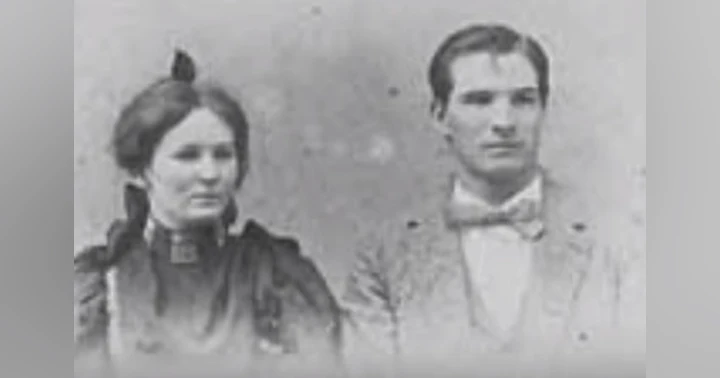
Zona Heaster Shue, the Greenbrier Ghost



In January 1897, a young bride, Zona Shue, was found dead on the floor of her home in the mountains of West Virginia. The doctor called it an everlasting faint — an old fashioned term for a sudden, unexplained death from natural causes. Days later, Zona’s mother woke in the cold, dark night to find an apparition standing at the foot of the bed. It was Zona, back to tell the story of how she really died. But would a jury buy it?
Today’s snack: Candy corn popcorn balls
Support us on Patreon: https://patreon.com/lovemarrykill
Sources:
- Anderson, Belinda. "Greenbrier Ghost, Zona Heaster Shue." Experience Greenbrier Valley, Greenbrier County Convention & Visitors Bureau, https://greenbrierwv.com/editorials/the-greenbrier-ghost
- Calvert, Kris. "Zona Heaster Shue and the Greenbrier Ghost: The 1897 West Virginia Murder That Became Legend." Hitched 2 Homicide, 30 Sept. 2025, https://www.hitched2homicide.com/
- Deitz, Dennis J. "Greenbrier Ghost." e-WV: The West Virginia Encyclopedia, West Virginia Humanities Council, 18 Sept. 2026, https://www.wvencyclopedia.org/entries/2104
- Demitry, Nicky. "The Greenbrier Ghost." Virginia Law Weekly, University of Virginia School of Law, 29 Oct. 2025, https://www.lawweekly.org/front-page/2025/10/29/b4nz0yz4betrskt1myor79tdf9jhdv
- "Greenbrier Ghost." Wikipedia: The Free Encyclopedia, Wikimedia Foundation, 16 July 2026, https://en.wikipedia.org/wiki/Greenbrier_Ghost
- McCrumb, Sharyn. Discussion Questions for The Unquiet Grave. 2017
- Rodgers, Garry. "How a Ghost's Evidence Convicted a Murderer – True Crime Story!" The Kill Zone, 16 Dec. 2021, https://killzoneblog.com/2021/12/how-a-ghosts-evidence-convicted-a-murderer-true-crime-story.html
- Sibray, David. "The Full Tale of West Virginia's Remarkable Greenbrier Ghost." West Virginia Explorer, 20 Jan. 2024, https://wvexplorer.com/greenbrier-ghost-zona-heaster-shue-west-virginia-wv/
- Tabler, Dave. "The Greenbrier Ghost." Appalachian History, 23 Jan. 2018, https://www.appalachianhistory.net/2018/01/greenbrier-ghost.html
- Weekley, Dave. "The Greenbrier Ghost is an Odd West Virginia Tale." WV MetroNews, West Virginia MetroNews Network, 21 July 2026, https://wvmetronews.com/2026/07/21/the-greenbrier-ghost-is-an-odd-west-virginia-tale/
0:01 January 1897. A young bride, Zona Shue, is found dead on the floor of her home in the mountains of West Virginia. The doctor calls it an everlasting faint, an old-fashioned term for a sudden unexplained death from natural causes. Days later, Zona's mother wakes in the cold, dark night to find an apparition standing at the foot of the bed. It's Zona, and she's come back to tell the story of how she really died. But would a jury buy it? I'm Tina. And I'm Rich. Welcome to a Halloween bonus episode of Love, Marry, Kill.
0:41 ¶ ¶. Hey, Tina. Hey, Rich. How are you today? I'm pretty good today. How are you? I am doing well. Yeah, nice shirt. Yeah, nice sweater for you, too. I put on a kind of fall-looking sweater. Mine is orange with some white stripes, and yours is. Pure orange. I inspired you, and you are wearing an orange hoodie. They say imitation is the sincerest form of flattery, and I always admire your fashion sense, so I am proud to be copying you.
1:24 Same, same. So we've never done a Halloween bonus episode before. We haven't? I don't think we have. We always aim for it, but we never have time. But this year, because you did your three-episode arc, you worked super hard on that, we have a little bit of wiggle room. So you whipped together this spooky story. Yeah, it's a little bit true crime, but it's a little bit of a ghost story too. So I think it's a good one for Halloween. So if children are listening, how scary is it? It's not especially scary. You might be scared because you're a scaredy-pants. What am I? Oh, am I? That's nice. Yeah. Are you scared? Am I scared right now? Yeah. Because of your face? Just hearing the opening, I thought maybe you would be a little scared going into it.
2:08 I'm apprehensive. Okay. I see. When you were growing up, what were you most scared of? In terms of monsters, vampires, ghosts? Frankenstein, werewolves, zombies. So I grew up in a big house in the country and there weren't a lot of houses surrounding us. And we used to like to watch scary movies. And my sister, who is five years older than me, used to like to scare me. And one time she went under my bed and she was like pushing up like underneath a mattress. Yeah. So I guess I was scared of my sister mostly. But, you know, yeah, just ghosts and intruders and things like that. How about you?
2:51 For me, I think it was vampires. I don't know why. Vampires just really terrified me. I went through probably different phases at different points in my life. But, yeah, the one I really remember is just being scared of vampires. Yeah. Well, did you have any encounters with vampires? I dressed up as a vampire for Halloween one year. But, no, I never had any actual encounters with vampires, thankfully. So the time when we were growing up, I think we had a lot of irrational fears. Remember satanic panic? Oh, yeah. Like if your toothpaste had like the Procter & Gamble, you know what I'm talking about? Oh, totally, yeah. Can you describe it? Because I can't really describe it. I know there were stars. It's like a pentagon or some kind of star in it that looked like a little bit satanic, I guess.
3:36 I don't remember exactly the logo, but people were convinced that Procter & Gamble was basically led by a satanic cult. Yeah, but there were a lot of fears and a lot of the TV shows of the time, you know, kind of fed into those fears, I think. Yeah. And then there was the Halloween candy panic. People like back in my day, maybe this would be four year time, but people were really terrified of like razor blades and Halloween candy, even though like there's never really been any case of that happening. But people were panicked and people would take their candy to. So that never, like people never... found razor blades in the candy that was just a rumor? I don't believe there's ever been a case of that actually happening.
4:17 I think there were a couple of actual incidents, but it wasn't a mass thing of people putting razor blades in candy. Well, I can assure you that the snack that I made today has nothing dangerous in it. So it's a little Halloween snack for you. It is candy corn popcorn balls. Oh, I love candy corn balls. You don't sound convincing at all. I do not like candy corn at all. How can you not like candy corn? Did you just say everyone? That is probably the most polarizing thing you've ever said. I think candy corn is very polarizing. Candy corn is so good. Coconut and raisins and things like that. Candy corn is just pure corn syrup. What's not to like about it? But candy corn is a small part of this treat. It's basically kettle corn. popcorn with some peanuts and some marshmallow and some candy corn.
5:12 Okay, it sounds good. Packed into a ball. It's very cute. You did a nice job. Thanks. Let's give it a try. What did you think of the candy corn popcorn balls? I liked the popcorn ball part of it, but... Every year I try a candy corn just to confirm that I don't like it. So I can check that off my list. It's good that you have an open mind that you try it every year. Everyone listening is like, she does not have an open mind, Rich. It was good. Thank you. I did love the candy corn part. That's okay. I understand. I am curious how many candy corns you ate in the making of these popsicles. Only probably 10, but there is like an extra bag.
5:52 I have to tell you. I had the hardest time finding candy corn at the grocery store. Because they no longer sell it because no one likes it. They hide it. They put it in a place where you can't find it. It's called an end cap from my years in the grocery store industry. But even on the end cap, it's hidden down. So our grocery store, we have an app for it. And I looked in the app, Meijer. It was probably in four different places at the Meijer. No, so I looked up in the app and it came back and it said it's in aisle R. There is no such thing as an aisle R in our grocery store. Store. But usually it's like kind of in the open part before you get to the cash registers. It was in all like with all the Halloween candy, but it was tucked down in a little corner of that whole display. So it was very hard to find.
6:34 But I enjoyed it. The tricky thing about this is that the popcorn, you actually put sugar in it. Like that's how you make kettle corn, I guess, which I've never done before. But it's very easy to burn the sugar. And so I had a failed batch that I had to redo. What, Pantene? I used our Dutch oven. It came out okay. Did it? Yeah. You don't have to worry about a thing. Whenever you've been in the kitchen, I can always tell. I know. But yeah, it's a really good treat. I think if you have kids and they like candy corn, you should definitely give it a try. I have a question for you, though. Okay. We've been together for a long time. 126 years. 27. But did you think I liked candy corn? No. Okay. Gotcha. Gotcha. I didn't, but sometimes it's good to make a traditional Halloween treat.
7:24 Generally, I try to make things that please you. Oh, I see. It's okay. I don't have to like everything. But you've opened up yourself to maybe some cream cheese snacks in the near future. I was going to do a trick-or-treat thing where I was going to have you choose between two doors, and one of them would have something really bad in it, but I decided not to do that. Okay, well, let's get to our story. It was February 1897 in Greenbrier County, West Virginia. It was cold, the kind of mountain cold where the logs of a cabin creak in the night. A woman named Mary Jane Heaster was lying awake in a small bedroom. It used to belong to her daughter Zona, but Zona had gotten married a few months ago, and by now, Zona had been dead and buried for a couple of weeks.
8:10 Every night since the funeral, Mary had done the same thing. She prayed. Not for comfort, but for an answer. She asked God to send her daughter back, just long enough to tell her what really happened the day that she died. After several nights of praying, Mary looked up to find the room filling with light. And then, standing at the foot of the bed, Mary saw Zona, wearing the dress she had been buried in. Mary would say that her daughter came back four times over the next four nights. She swore it wasn't a dream. She had actually reached out and touched Zona, and her arm was solid. Not mist, not air, but flesh. And on the final visit, as Zona was leaving, she turned her head all the way around, 180 degrees, until she was looking at her mother over her own spine.
9:03 Zoinkies. Yeah, scary. Today, along Route 60 in rural West Virginia, not far from Zona's grave, there is a state historical marker. It calls this the only known case in which testimony from a ghost helped convict a murderer. The case of Zona Shue is a little bit true crime and a little bit ghost story. It's a real murder with a real trial, but the key witness for the prosecution was a dead woman. This is the story of Zona Shue, also known as the Greenbrier Ghost. Zona grew up in Greenbrier County in the mountains of southeastern West Virginia. Her full name was Elva Zona Heaster, but everyone just called her Zona. In the fall of 1896, she was in her early 20s.
9:57 Those are names that you don't hear anymore. No, you don't. I really like the name Zona, though. I think it sounds kind of nice. Elva's kind of cool, too. That fall, a stranger came to town. He was a blacksmith from neighboring Pocahontas County who came over to work at James Cruikshank's shop in a little settlement called Livesay's Mill. He was 36. People described him as a towering man and very strong. He introduced himself as Edward Shue, which wasn't exactly his name. His full name was Erasmus Stribling Trout Shue. Today, most people who write about him call him Trout, so that's what we'll call him too. Zona met Trout, and she fell hard, madly in love. The courtship was short, weeks, not months. But there was one person who did not like this man. We don't know exactly why Mary disliked him. Maybe it was a gut feeling.
10:53 Maybe it was the speed of the whole thing. But if Mary had known his history, she would have had some good reasons. Before he ever came to Greenbrier, Trout had already served two years in the state penitentiary for stealing a horse. He had also been married twice. His first wife divorced him after he abandoned her and their child. His second wife died. According to Trout, he was up on the roof of their house in Pocahontas County repairing damage from a winter storm, tossing broken bricks down to the ground. And somehow, one of those bricks struck his wife in the head and killed her. It was ruled an accident. How likely do you find that story? He was up on the rooftop tossing bricks down and one just happened to hit his wife in the head?
11:38 I questioned whether roofs could be made of bricks. I googled it and they can be, so... I don't know. It seems pretty unlikely to me. Yeah. Some versions of this story gave him a third dead wife who supposedly died in a fall from a haystack, which was also ruled an accident. But most sources only mention two wives, so take that one with a grain of salt. But even at two, this is not a resume that you want in a husband. One of the challenges in doing these older cases like this is just the information is very limited and a lot of it is sort of hearsay. Whatever the reason, Mary disapproved of Trout, and according to at least one account, Zona and Trout handled that the classic way. They eloped and were married in October 1896. On her wedding day, Zona wore a burgundy dress with a high, stiff collar. The newlyweds moved into a small, two-story log house that once belonged to William Livesay, the man the settlement was named for. Trout worked at the forge while Zona kept the house. The marriage lasted just three months before Zona was dead.
12:45 Do you have any idea how long the other marriages lasted? I don't know. There was no information about his previous marriages. In January 1897, Zona fell ill. You don't know with what. For a couple of weeks, she was under the care of the local doctor, J.M. Knapp. And by all outward appearances, Trout was the model husband. Attentive and concerned, he took good care of his ailing bride. That brings us to Saturday, January 23, 1897. Early in the morning, Trout showed up at the cabin of a neighbor everyone called Aunt Martha Jones. She had a young son named Anderson, also known as Andy.
13:27 Trout asked if Andy could go over to his house later and do some chores for Mrs. Shue while he was at work. On its face, a kind thing to do for his sick wife. Thirteen years later, in 1910, Andy told his story to the New York Sunday American newspaper. So we'll let Andy tell his story in his own words. Quote, I can remember it well. It was a Saturday. Mammy told Mr. Shue I had to go to Dr. Knapp's first and finish some work there. He seemed to resent this, but asked if I could go later in the day. Four times he came back to the house for me. Each time I was busy. About 1 p.m., he came again and I agreed to run his errand. Going to the house, I felt that something was wrong. All the doors were closed and there was an air about the place I did not like. Reaching the steps, I saw a trail of blood. That scared me, but I went to the door and knocked. No one answered. I tried it and finding the door unlocked, walked into the kitchen.
14:28 The trail of blood continued across the floor to the dining room. This door, too, was closed. Once more I knocked, and getting no answer, walked in. I stumbled over Mrs. Shue's dead body. There she was, stretched out on the floor, looking right up at me, wide open eyes. She seemed to be laughing. I was frightened, but still able to reach down and shake her. She was stiff and cold. Running from the house, I called across the field to Aunt Martha.' Mrs. Shue is dead!' Andy ran down the road to the blacksmith shop and found Trout there with a man named Charles Tapscott. When Andy told him Zona was dead, Trout let out a yell, and he and Tapscott took off for the house. Andy kept going to fetch Dr. Knapp. Andy and the doctor couldn't have been far behind, but by the time they walked in, Zona was no longer on the floor. Once again, here's Andy's account of what happened next. Shu had taken his wife from the floor and placed her on the bed, and held her head in his arms, crying for her to come back. But the strangest of all, although no one thought of it at the time, he had dressed Mrs. Shue, placing one of those old-fashioned high stiff collars around her neck, and holding it in place with some kind of scarf.
15:47 In the time it took for the doctor to arrive, the grieving husband had moved his wife and dressed her, in a dress with a high stiff collar, the same dress she had worn for their wedding. with a veil tied in a big bow under her chin. In those days, preparing a body for burial was usually done by the women of the community, not by the husband, and certainly not that fast. Dr. Knapp, who was also acting as coroner, tried to examine her, but Trout wouldn't let go of her head. He held it against his chest, sobbing. Andy said, throughout his efforts to revive the woman, Shu continued to hold her head, refusing to let him examine it. Finally, the doctor turned and said, It is an everlasting faint.
16:32 Her heart has failed. An everlasting faint is a real phrase people used back then. It meant more or less her heart had stopped, but we don't know why. Some accounts say Knapp also considered complications from pregnancy. Either way, he signed it off as natural causes. Doesn't seem like a very thorough examination, but I guess back in those days, it. Seemed a little quicker. The next day, Zona's body was carried over the mountain to her mother's home for the wake, and the people who came to pay their respects noticed some things. Trout never left the head of the coffin, not once while anyone else was in the room. He stood right there by Zona's face, and when he did step away, he wouldn't let anyone else get close, not even her mother. But grief does make people act strangely.
17:23 Everybody probably told themselves that. On Monday, Zona was buried in a little graveyard on the side of the mountain at Soul Chapel, married just three months before and dead in her 20s. And everyone accepted it, the doctor, the neighbors, the church, everyone but one person. After the funeral, Mary Jane Heaster couldn't let it go. Something about the way her daughter died and the way Trout behaved at the wake seemed wrong to her. So she started sleeping in Zona's old room, and every night she prayed long and hard that her daughter would come back and tell her what really happened. Several days after the funeral, Mary woke in the dark. There was a noise in the little cabin room. She peered across the room and could make out a shape. And then it wasn't a shape anymore.
18:13 It was Zona in the dress that she was buried in. Mary would later say Zona seemed to step out of a pool of light. Her daughter looked as if she were about to speak. Mary reached out her hand toward her. And just like that, Zona was gone. So the next night, Mary prayed again, harder, and Zona came back. This time, she spoke. Mary reached out and touched her daughter's arm, and she was shocked because it was solid, cold but solid, as if her daughter were standing right there in the room. Zona came back a third night, and then a fourth. Four visitations in all. Over the course of those four nights, she told her mother everything about how she had died.
18:58 Zona said that she'd been sick, too weak to make supper. So she put out what she had, bread and butter, applesauce and preserves. When Trout came home from the forge, tired and hungry, and saw there was no meat on the table, he flew into a rage. He came at her. Some versions of the story say he grabbed her by the throat and squeezed. The version Mary gave under oath is more specific and somehow worse. You'll hear it in her own words shortly. Zona's ghost told her mother something else, too, that this wasn't the first time Trout had attacked her. There had been abuse in that house all through that very short marriage. On the fourth night, Zona turned to go.
19:42 As she left, she turned for one last look at her mother. But her body didn't turn, only her head. It rotated slowly. all the way around, 180 degrees, until she was looking back at her mother over her own spine. It was as if she wanted her mother to see it, as if she were saying, this is what he did to me. After the fourth and final visitation, Mary started telling people. Her family first, then her neighbors, then anyone who would listen. And people were polite about it, kind even. Most of them figured that she was a grieving mother, having very vivid dreams. Who could blame her? But as the story spread, neighbors began remembering things on their own.
20:27 The way Trout hovered at the head of that coffin, the way he held Zona's head while the doctor tried to examine her, the collar, the veil, the bow, and the two wives before her. A ghost might sound far-fetched, but Trout Shue is a killer, not so much. We'll be back after a break. Mary found an ally in her brother-in-law, Johnson Heaster. Johnson heard the story and decided there might be something to it, so he rode over the mountain to Livesay's Mill and went to talk to Trout himself. We don't know what was said, but Johnson walked away more suspicious, not less.
21:14 So he kept going. He talked to Andy Jones, and he talked to others who were in the house that day. By the end of it, Johnson was convinced Zona hadn't died from an everlasting faint. She had been murdered. So Johnson and Mary went together to the county seat, Lewisburg, to see the prosecuting attorney, a man named John A. Preston. Preston deserves some credit here. A grieving mother walks into your office and tells you your dead daughter came back as a ghost and named her killer? The easy move is to nod politely and show her the door. Instead, he talked with them for hours and then he started asking questions. His first stop was Dr. Knapp. And to his credit, Knapp admitted he might have gotten it wrong.
22:00 Zona had been sick, yes, but the circumstances of her death bothered him, too. He had never really been able to examine her because her husband had been in the way. The two men agreed they would dig her up and do a proper autopsy. At worst, it would give a grieving mother some peace. The next day, Preston and Dr. Knapp went to Livesay's Mill and told Trout what was happening. They ordered him to come with them over the mountain to his wife's grave. He protested, but he didn't dare refuse. And the whole way there, he kept muttering the same thing. I don't know what in the name of God they're taking her up for. They're not going to find anything.
22:41 He was wrong. They dug up the coffin in the dead of a mountain winter and carried it down the road to a one-room schoolhouse, which served as their autopsy room. And Trout stayed the whole time, visibly nervous, according to those who were there. Knapp checked for poison first, but found nothing to indicate this. He kept looking, and as the story is usually told, He worked for days, searching for a cause of death and coming up empty. On the third day, Dr. Knapp was about ready to give up, and then he found something. He turned to Preston and whispered in his ear, and Preston turned to Trout Shue and said, Well, Shue, we have found your wife's neck to be broken. When they removed that high, stiff collar, her head fell to one side. There were finger-shaped bruises along her throat, a crushed windpipe. torn ligaments, and her neck completely dislocated between the first and second vertebrae at the very top of the spine. So the high collar, the veil tied in a bow under her chin, the scarf, never letting go of her head and never letting anyone near the coffin, he wasn't grieving, he was hiding evidence.
23:54 And everything matched Mary's story of what Zona's ghost had told her. Zona's body was returned to her grave. Trout Shue was arrested, taken back to Lewisburg, charged with murder, and locked in the county jail without bond. Preston was convinced he had the killer, but he knew there was a problem. Yes, Zona had a broken neck and Trout Shue acted guilty of sin, but Preston had no confession and no eyewitnesses, and the thing that started this whole case was a ghost. So Preston and his assistant, Henry Gilmer, spent months digging for more evidence. They worried Mary's story wouldn't be enough, or worse, that it would make the whole case look ridiculous. Despite their efforts, they found nothing. The trial opened on June 30, 1897 in Lewisburg.
24:47 The courtroom was packed to capacity, with people from both sides of Sewell Mountain. In his opening, Preston was up front. He told the jury his case was circumstantial. but he also told them that Mary's testimony about her visions would prove authentic and that the state would prove it. Dr. Knapp testified first. He described the autopsy and said the neck was dislocated so cleanly that it escaped his notice for days. Andy Jones testified about Trout coming back for him four times and about finding the body. Other witnesses said Trout was the only person known to have been in that house that morning. and several described how he had dressed her, the collar, the veil, and the bow.
25:32 Some witnesses said that Trout just didn't seem that sad, that he failed to show a proper appreciation of his loss. Then, Mary Jane Heaster took the stand. As far as we know, no American jury had ever been asked to weigh testimony like this. On direct examination, she told it all, the prayers, the four visits, the husband, But the real fireworks came on cross-examination. Trout's defense attorney was a man named Dr. Rucker. His strategy was obvious. Get married to admit that these were dreams. A grieving woman's nightmares, but not evidence. Here is a little bit of the back and forth. Mrs.
26:15 Heaster, did you not have a dream that aroused your suspicions to lead you to have the body exhumed? I had no dream, for I was fully awake as I am at this moment. And did you not have a dream or vision that led you to have the body disinterred? Well, I was not satisfied that my daughter came to her death from natural causes, so I prayed that it might be revealed to me how she died. After about an hour spent in prayer, I turned over, and there stood my daughter. I put my hand out to feel for the coffin, but it was not there. She seemed to hesitate to speak to me, then departed. The next night after I prayed again, the manner of her death might be shown. She appeared and talked more freely, giving me to understand that I should be acquainted with the whole matter. The third night she appeared again and disclosed more to me. And on the fourth night she returned and told me all about the difficulty, how it occurred, and how it was brought about. And then Mary quoted the ghost directly to the jury. These are the words she said her daughter spoke to her. He came that night from the shop and seemed angry. I told him supper was ready, and he began to chide me because I had prepared no meat. I replied there was plenty, bread and butter, applesauce, preserves, and other things that made for a good supper. He flew into a rage, got up, and came toward me. When I raised up, he seized each side of my head with his hands and by a sudden wrench dislocated my neck.
27:46 Now, Mrs. Heaster, this sad affair was particularly impressed upon your mind, and there was not a moment during your waking hours that you did not dwell upon it? No, sir, and there is not yet either. And this was not a dream founded upon your distressed condition of mind? No, sir, it was not a dream. I was as wide awake as I ever was. Then, if not a dream or dreams, what do you call it? I prayed to the Lord that she might come back and tell me what happened, and I prayed that she might come herself. and tell on him. Do you think you actually saw your daughter in flesh and blood? Yes, sir, I do. I told them the very dress she was wearing when she was murdered. When she was about to leave the room, she turned her head completely around and looked at me, like she wanted me to know all about it.
28:32 Now, Mrs. Heaster, don't you know these visions, as you term or describe them, were nothing more or less than four dreams founded upon your distress? No, I don't know it. The Lord sent her to me to tell it. I was the only friend she knew she could tell and put any confidence in. I was the nearest one to her. Mrs. Heaster, are you positively sure these were not four dreams? Yes, sir. They are not dreams. I do not dream when I am wide awake to be, sure. And I know I saw her right there before me. Are you not considerably superstitious? No, sir, I am not. I was never that way before, and I am not now. Do you believe in the scripture?
29:13 Yes, sir. I have no reason not to believe in them. And do you believe the scripture contains the words of God and his son? Yes, sir. I do. Don't you believe it? Now, I would like, if I could, to get you to say these were four dreams and not visions or appearances of your daughter in flesh and blood. If I am going to say that, I am going to lie. Then you insist your daughter actually appeared in flesh and blood before you on four different occasions. Yes, sir. When she came? did you touch her? Yes, sir. I got up on my elbows and reached out a little further as I wanted to see if people came in their coffins. I leaned up and made a light. I wanted to see if there was a coffin, but there was not. She was just like she was when she left this world. It was just after I had gone to bed. I wanted her to come and to talk to me, and she did. This was before the inquest, and I told my neighbors. They said she was as exactly as I told them she was.
30:09 Had you ever seen the premises where your daughter lived before these visits? No, sir, I had not. But I found them exactly as she told me they were. Normally, you might think that the defense would object to this kind of testimony. Not only is it hearsay, but it's hearsay that it comes from a ghost. But Rucker was the one asking the questions. Every question meant to make Mary look unhinged gave her another chance to tell the jury in her daughter's voice exactly how Trout had killed her. In effect, he let the ghost testify. Twelve jurors in Greenbrier County heard a dead woman through her mother say, He seized each side of my head and by a sudden wrench dislocated my neck. And the autopsy verified the same thing.
30:54 Trout Shue took a stand in his own defense. He was up there for nearly an entire day. He swore he was innocent, telling the jury he had loved his wife dearly. The jury went out and came back in a little over an hour. They found Trout guilty of murder in the first degree and recommended life in prison rather than death. A lot of people in Greenbrier County thought that wasn't enough. A mob formed. The plan was to drag Trout out of the county jail and hang him. The poetic justice they had in mind was that he should die the same way Zona had, with a broken neck. A neighbor named George M. Herra heard about the plan.
31:35 Instead of joining in, he got on his horse and rode to the home of Sheriff Nickel at Meadow Bluff. The two of them set out for Lewisburg to protect the prisoner. But to get there, they had to ride right past the mob, which had gathered at a campground. A few of the would-be lynchers spotted them, chased them down, and captured them at gunpoint. The sheriff drew his own gun. He was about to fire, and then he recognized the man pointing a gun at him. He knew him. So instead of shooting, the sheriff talked to him and appealed to his sense of morality. And eventually, the whole mob broke up and went home. Two days later, Trout Shue was transferred to the state penitentiary at Moundsville. He didn't last long there. Some sources say he died eight years into his sentence, but most accounts agree on a specific date, March 13, 1900, about three years in. One version says the flu got him. Zona, meanwhile, is still up there in the cemetery at Soul Chapel in Greenbrier County, and just down the road on Route 60 stands that historical marker.
32:43 Here's what it says. Interred in nearby cemetery is Zona Heaster Shoe, Her death in 1897 was presumed natural until her spirit appeared to her mother to describe how she was killed by her husband Edward. Autopsy on the exhumed body verified the apparition's account. Edward, found guilty of murder, was sentenced to the state prison. Only known case in which testimony from a ghost helped convict a murderer. The story never really went away. There's a 2017 novel by Sharon McCrum based on the story called The Unquiet Grave. There have been at least four stage adaptations, including a musical called The Greenbrier Ghost, that Greenbrier Valley Theater has revived again and again since 2003, including this year. In 2023, an opera based on the case premiered in Madison, Wisconsin.
33:38 Its title? Everlasting Faint. The case even got an episode of Comedy Central's Drunk History. And in 2019, authors Nancy Richmond and Misty Murray-Walkup published a book called The Haunting of Zona Heaster Shoe, in which they claim Zona's ghost visited them, too. That is the story of Zona Heaster Shoe, the Greenbrier ghost. If you ever find yourself driving Route 60 through Greenbrier County, stop at the marker and say hello to Zona, but maybe don't stay after dark. We usually close by wishing the victims to rest in peace. But Zona didn't wait for us to say it. She came back and earned it herself. In any case, rest in peace, Zona. All right, well, a few things to talk about with this case. As long as you're not too scared. Are you doing okay?
34:28 I'm good. Good. Not too spooky for you? Not yet. Usually it's at night that I get scared. So what do you think actually happened in that bedroom? So I think there are three basic possibilities. One is that Zona came back as a ghost and told her mother what happened. Two, already suspicious of her son-in-law, Mary had some vivid dreams that confirmed her worst fears. Or three, Mary knew exactly what she was doing. She was convinced that Trout did it, but no one in authority seemed to care, so she told a ghost story to get things moving. What do you think? I think Mary knew what she was doing and kind of invented the apparitions. What do you think?
35:09 I kind of think so, too. I think that's what most people sort of agree on at this point, that she... Was trying to find a way to get her daughter's case, you know, back in the spotlight and get it looked at because it really wasn't. Looked at very thoroughly. I wish every victim could come back and tell their story. I wish that really could happen. That would be great. Do you think a jury today would come to the same conclusion as the jury did then back in 1897? If it was only based on Mary's testimony, no. But I mean, how else was Zora beheaded? Well, she wasn't beheaded. Her neck was broken. For some reason, I'm picturing her neck completely severed. How was her neck broken otherwise with the bruising around her neck too, right? Yeah.
35:53 It seems like that's pretty strong evidence on its own. And today, of course, the autopsy would be much more thorough and definitive, whereas back then, I think Dr. Knapp just sort of looked at her and was like, oh, you know, first he was like, I think it was just natural causes. And then it took three days to figure out that she actually had a broken neck. Yeah. Well, without x-rays and other technology, it must have been, you know, pretty hard to do an autopsy, not to mention the smell of, you know. Yeah. And doing that in a one-room schoolhouse in the mountains in the middle of winter. They call school law? I would hope so. I do. One-room schoolhouse. I can't imagine they were like, the body was over here and they were having class on the other side of the room.
36:34 It made me wonder about, so you said, well, the doctor was first checking for poison. And how would a doctor check for poison? I thought the same thing. Like, yeah, what did he actually do? Yeah. And exhumation. I'm just curious how often exhumation happened back then. I would guess not very often. Yeah, probably not. There's so much about this story. I think it's a really good story. It's a little bit spooky. I do. love the aspect that there is basically a ghost testifying at trial. Mary Jane was basically using her daughter's words when she came back as a ghost. But I suspect a lot of this story has developed into legend over time and different things have been probably added into it.
37:14 And who knew that you were born to play an old-timey prosecutor? Actually, I guess it was a defense attorney. Yeah, I think I was born to play that part. Well, that is the spooky story of the Greenbrier Ghost. When I was a kid, I had a little record player and I had some records that were like people telling stories. Oh. And this reminds me of one of the stories. And I loved this story and I listened to it all the time. And it really was scary that it was about a woman who wore... Oh, yeah. I know that story. You know this story? Oh, yeah. Totally. Yeah. And the woman wore... What would you call it?
37:56 Like a scarf and a brooch or something around her neck. It was more like, it was a piece of jewelry. Like there was a velvet ribbon with like a cameo. She never took it off. She never took it off. And she warned her husband, never take it off. Never take it off. But he did. He didn't listen, did he? But he did. And what happened? And her head fell off. I remember that story very vividly too. Yeah. I listened to it all the time and it really did scare me as a kid. And yeah. That's a really spooky one. Well, I have a little game of, Halloween Family Feud. Okay. It's only me and you. I know. It's just going to be me giving you. Oh, okay. It's going to be the fast money round. So I've got some survey results of different Halloween questions that people have been asked. And so, yeah, I've got 10 questions.
38:40 Fast money round, but it's going to be 10 questions instead of five. Okay. All right. Are you ready? Sure. We surveyed 100 people. What is the worst kind of candy to get during trick-or-treating? Candy corn. Candy corn. What flavor of jelly bean do you avoid eating? The black ones. Oh, I don't have to buzz in, do I? That's okay. Name a mean prank kids pull on Halloween. A mean? Agging someone's house. Name something you're hoping is fake at a Halloween party because you would be afraid of a real one. I don't know. Bones. Name something pumpkin flavored. Pumpkin spice latte. Name something people are afraid of that starts with the letter S. Name a career children dress up for as Halloween.
39:27 Policeman. Name something black associated with... Halloween. Black cat. Name a place you would hide during a zombie attack. I don't know. You could be dead. I know, I'm dead. The basement, which I know is the worst place, so come get me. All right, last one. Name a place kids might think that monsters hide in their house. Under their bed. All right, I think you did very well here. They were the hardest questions in the world. Worst kind of candy to get. You said candy corn. That was the number one answer. See? People are crazy. Or a box of raisins also. Raisins was the number four answer.
40:07 I always think of David Letterman and he used to like have kids like come to and he would give them like cans of tuna and things like that. I think of that every Halloween. I don't think I've ever done that to a kid. No, that would be pretty cruel. What flavor of jelly bean do you avoid eating? You said black. That was the number one answer as well. The number two answer was all jelly beans are gross. So there's jelly beans have improved since when we were kids. Jelly beans are... I never really liked them, but now, you know, Starburst, Jelly Beans, Jolly Rancher, Jelly Beans, those are. You get a lot of good varieties. Right. I didn't like them when I was a kid, really. Yeah. Name a mean prank kids pull on Halloween. You said egging houses, I think. Uh-huh. That was the number two answer. Number one was toilet paper. Toilet paper, yeah.
40:51 Name something you were hoping is fake at a Halloween party. I don't remember what you said. Oh, bones. Bones. Okay, that was the number two answer. I had a Halloween party once, and it was when I worked at the grocery store, and we did get bones from the butcher department. Oh, really? Yeah. So they were real, just not human bones, though. Right, they were animal bones. Spider was the number one answer. Name something pumpkin-flavored. You said latte. That was the number two answer. Pumpkin pie was the number one. Name something people are afraid of. That starts with the letter S. You said snakes. That was the number two answer. Spiders was number one.
41:31 I'm not that scared of spiders. I don't love them, but compared to snakes, it doesn't even compare for me. I don't like spiders at all. I really don't. Name a career children dress up for as Halloween. You said police officer. That was the number one answer. And then something black associated with Halloween. Cat as number one answer for sure. Name a place you would hide during the zombie attack. Basement was the number one answer. Oh, okay. And then name a place kids might think monsters hide. You said under the bed. Yeah. That was the number two answer. Closet was the number one. Okay. Wow. You did very good. I think you won your fast money round. Do I get $ 10, 000? You get to eat the rest of your popcorn.
42:14 I actually ate the rest of mine. I picked out the candy corn. Other than the candy corn. And I, yeah. Well, you can have another one now. Before we go, do you want to talk a little bit about Carrie? We've been watching that show. I really don't want to say anything other than we're really enjoying it. I think we have two or three episodes to go. And if you haven't watched it, you're looking for something scary to binge watch over the next week or so before Halloween, I highly recommend it. Yeah, I think it's really well done. No spoilers for us, though, because like you said, we haven't quite finished it yet, but hopefully we'll finish it next. By the time this publishes, I bet we'll probably finish it. Yeah, definitely. It's on Amazon Prime and. If you like the movie Carrie, it's different, but it's got enough similarities that I think if you like the movie, I think you would like the show as well.
42:59 I actually think I like the show better. I feel like it's a really good modern day retelling. Yeah, I think it is too. Jury is still out whether it's better because the movie Carrie is really one of my favorite horror movies. Oh, is it really? Yeah, I think it's really, really well done. I don't really remember the movie. I read the book probably in high school, but I don't really remember the movie super well. Brian De Palma directed it, and he's just one of those directors that's always just kind of over the top with everything. Yeah, I think it's very well done, but so is the show. Well, check it out. Well, thank you all for hanging out with us. Hopefully you enjoyed this special Halloween episode. We love you all. Happy Halloween. Until next time. Don't kill your wife. And don't kill your husband.
43:46 Thank you. Thank you.