The Greenbrier Ghost: How Zona Shue Testified from Beyond the Grave
This post covers the historical facts, investigation, trial, and verdict in the 1897 murder of Elva Zona Heaster Shue. If you haven’t listened to our full episode yet, be sure to catch the audio first!
An “Everlasting Faint” in the West Virginia Hills
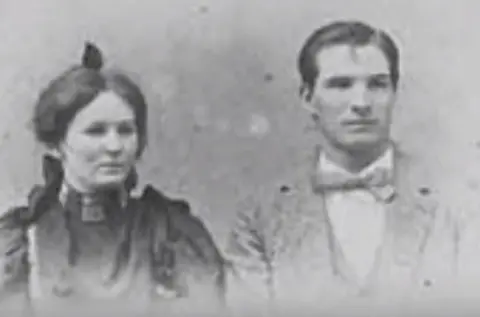
In the bitter mountain winter of January 1897, newlywed Elva Zona Heaster Shue was found dead on the floor of her Livesay’s Mill home in Greenbrier County, West Virginia. She had been married just three months to Erasmus Stribbling Trout Shue—a towering, charming local blacksmith who had recently arrived from Pocahontas County.
When local physician and acting coroner Dr. J. M. Knapp arrived at the cabin, he encountered a strange scene. Trout had already lifted Zona’s body onto the bed, dressed her in her high-collared wedding gown, and fastened a veil tied in a large bow under her chin. Trout wailed theatrically and clutched his dead wife's head to his chest, refusing to let the physician examine her neck or head. Pressed for an answer, Dr. Knapp chalked it up to an “everlasting faint”—heart failure from natural causes or sudden illness. Zona was laid to rest at Soule Chapel, and the town prepared to move on.
Everyone, that is, except Zona’s mother, Mary Jane Heaster. Convinced her son-in-law was harboring dark secrets, Mary spent weeks praying for the truth. According to Mary, her prayers were answered across four consecutive nights of visitations. The apparition of Zona detailed domestic abuse, a violent rage sparked by a supper missing meat, and a fatal snapped neck. What began as an eerie mountain ghost story soon turned into West Virginia’s most famous legal legend—leading to an exhumation, a dramatic courtroom showdown, and the only known conviction in American history aided by testimony from beyond the grave.
Case Timeline
| Date | Event |
| Fall 1896 | Trout Shue arrives in Greenbrier County; woos and quickly elopes with Elva Zona Heaster in October. |
| January 23, 1897 | 11-year-old Anderson Jones discovers Zona dead inside her cabin; Dr. Knapp attributes the death to an "everlasting faint." |
| January 25, 1897 | Zona is buried at Soule Chapel Cemetery after a wake where Trout vigilantly guards the head of her casket. |
| February 1897 | Mary Jane Heaster reports four nightly visitations from Zona's spirit, detailing her murder and physical abuse. |
| Late February 1897 | Mary and brother-in-law Johnson Heaster convince Prosecutor John A. Preston to reopen the case and exhume Zona's body. |
| Early March 1897 | In a one-room schoolhouse, Dr. Knapp's autopsy confirms a broken neck, severed ligaments, crushed windpipe, and finger marks on her throat. Trout is arrested and jailed. |
| June 30 – July 11, 1897 | Murder trial in Lewisburg; defense attorney Rucker aggressively cross-examines Mary about her ghost sightings, accidentally putting the full story on the record. |
| July 11, 1897 | Trout Shue is convicted of first-degree murder and sentenced to life imprisonment. Sheriff Nickell disarms a lynch mob bent on hanging Trout. |
| March 13, 1900 | Trout Shue dies at the West Virginia State Penitentiary in Moundsville. |
The Evidence Locker
-
Unprecedented Funeral Dressing: Trout moved Zona’s body to the bed and dressed her himself before Dr. Knapp arrived—an extreme breach of 19th-century customs, which dictated local women prepare deceased females for burial.
-
The High Collar & Veil: Trout deliberately hid her neck using a stiff high collar and a large veil tied under her chin, propping pillows and clothing around her head in the coffin.
-
Vigilant Gatekeeping: Trout refused to leave the head of the casket during the wake and actively blocked mourners—including Zona's mother—from getting close.
-
Staged Discovery: Trout repeatedly visited neighbor Martha Jones four times on the morning of the murder, insisting that young Andy Jones run an errand to his house, ensuring someone else would "discover" the body while he established an alibi at the blacksmith shop.
-
Autopsy Findings: When exhumed, Dr. Knapp discovered finger impressions on Zona’s neck, a crushed windpipe, and a complete dislocation between the first and second cervical vertebrae, matching Mary’s account of sudden blunt trauma and strangulation.
-
Trout's Dark Past: Prior to arriving in Greenbrier, Trout had served two years in prison for horse theft, had been divorced for abandonment and abuse, and his second wife had died under suspicious circumstances from a "falling brick" while he was repairing their roof.
Tina & Rich’s Takeaways
Tina: "I think Mary knew what she was doing and kind of invented the apparitions
. I wish every victim could come back and tell their story . I wish that really could happen. But how was her neck broken otherwise, with the bruising around her neck too ? Without X-rays and modern technology, doing that autopsy in a one-room schoolhouse in the middle of winter must have been brutal ."
Rich: "I kind of think so too
. Most people sort of agree at this point that Mary was trying to find a way to get her daughter's case back in the spotlight and get it looked at, because authorities really didn't examine it thoroughly the first time . The physical evidence on its own was damning . I do love the theatrical aspect of a ghost testifying through her mother at trial, but no doubt a lot of this story developed into folklore over time ."
Sources & Further Reading
-
Experience Greenbrier Valley: Greenbrier Ghost, Zona Heaster Shue -
e-WV: The West Virginia Encyclopedia – Greenbrier Ghost -
West Virginia Explorer: The Full Tale of West Virginia's Remarkable Greenbrier Ghost -
Appalachian History: The Greenbrier Ghost -
Virginia Law Weekly: The Greenbrier Ghost -
The Kill Zone: How a Ghost's Evidence Convicted a Murderer -
WV MetroNews: The Greenbrier Ghost is an Odd West Virginia Tale
What Do You Think?
-
Ghost, Grief, or Strategy? Do you believe Mary Jane genuinely experienced paranormal apparitions, had grief-fueled dreams, or crafted the ghost tale as a calculated tactic to force local authorities into action
-
The Defense’s Blunder: Defense counsel Rucker thought grilling Mary on the stand would expose her as superstitious and unreliable, but it ended up letting her recount the murder vividly to the jury without hearsay objections. Was this the worst cross-examination blunder of 19th-century Appalachia?
-
Modern Juror Lens: If a murder case today hinged on circumstantial physical signs alongside a family member claiming paranormal visitations, how do you think a modern jury would react
Join the Conversation
We want to hear your theories! Did Zona reach across the veil, or did a sharp Appalachian mother outwit the legal system to avenge her daughter
-
Send us your thoughts via our
Contact Form -
Leave us a voice message at
lovemarrykill.com/voicemail -
Support the show and access bonus material over on
Patreon
A Hero’s Mask: The Calculated Double Murder of Donnah Winger and Roger Harrington